The quoting engine
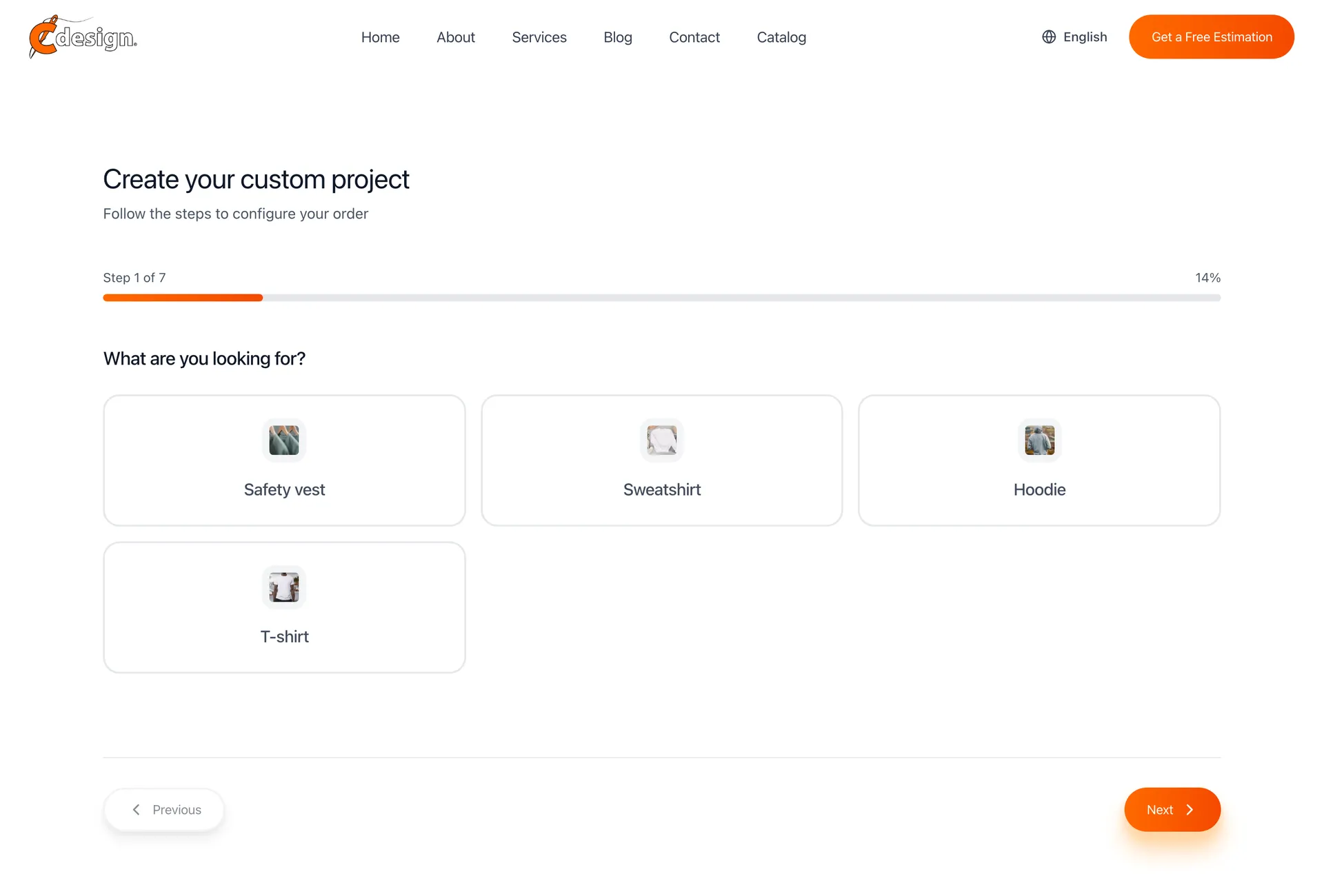
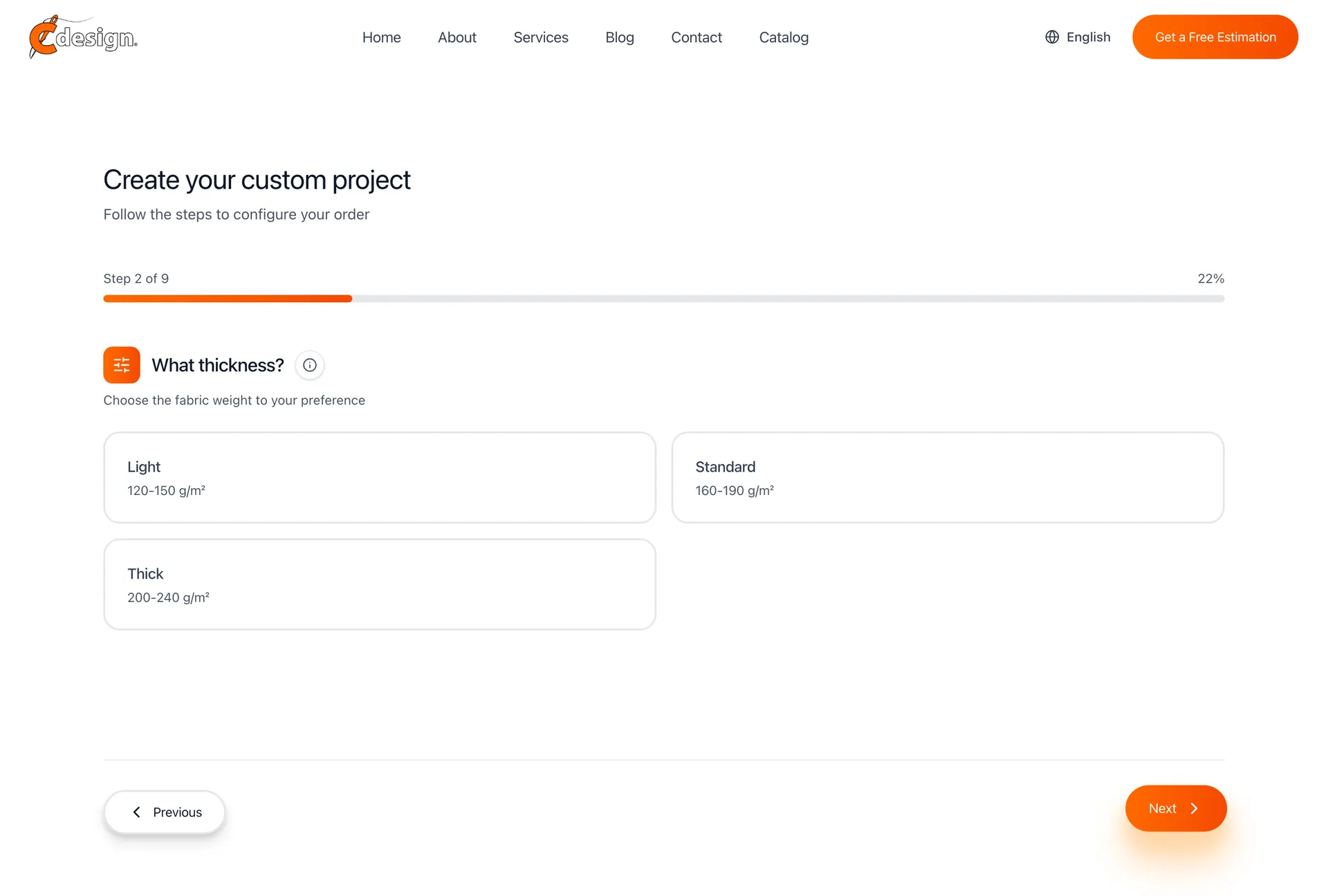
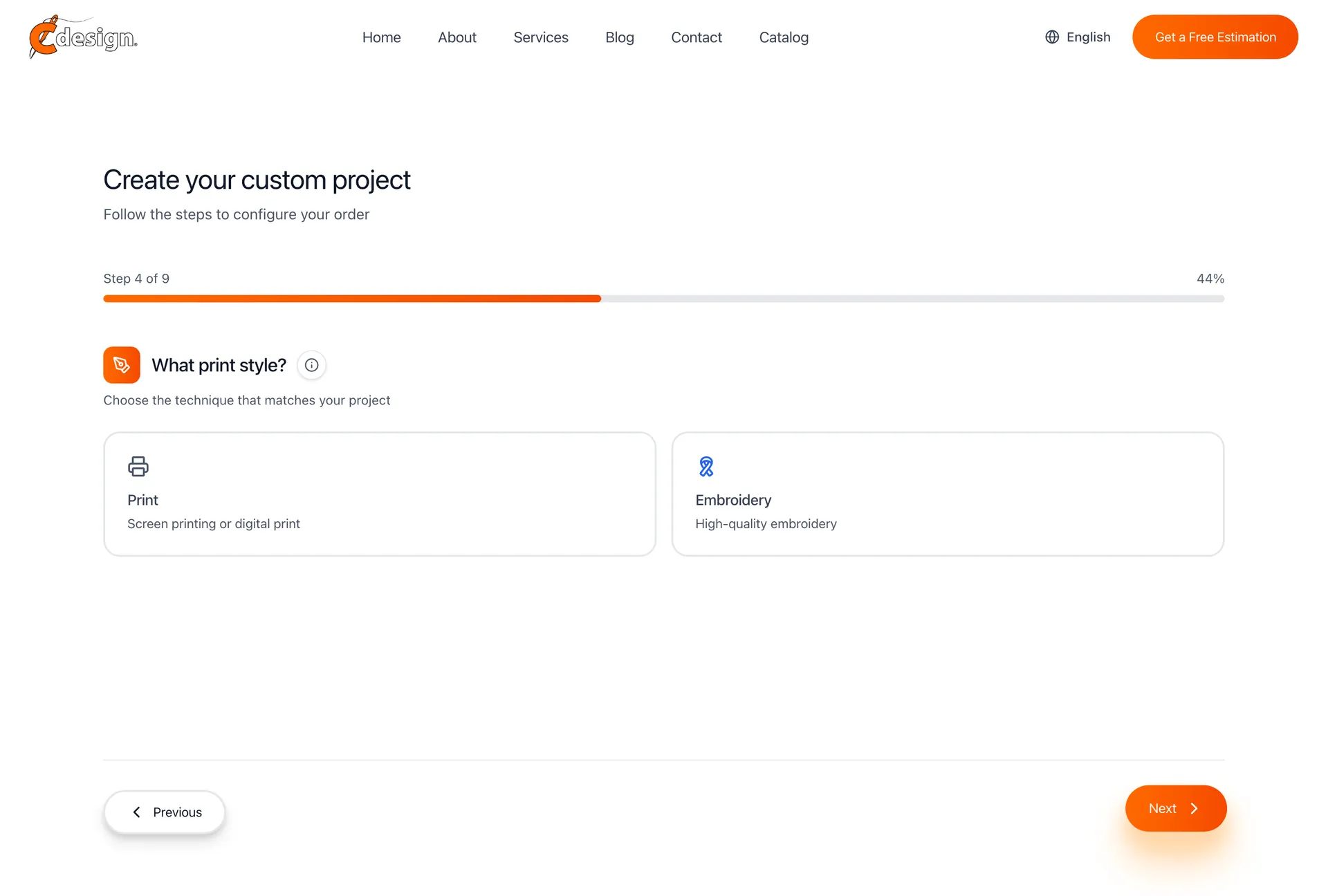
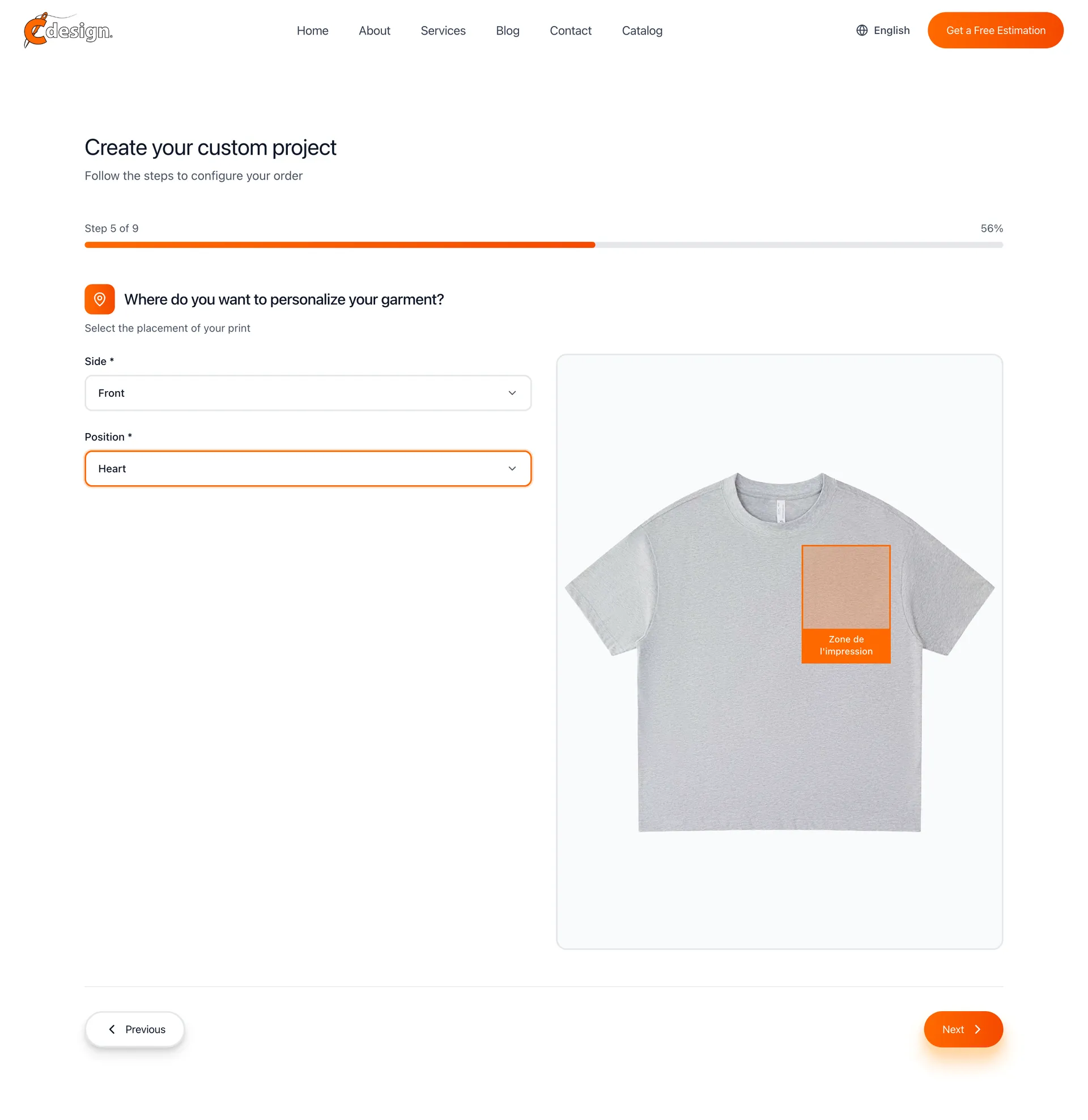
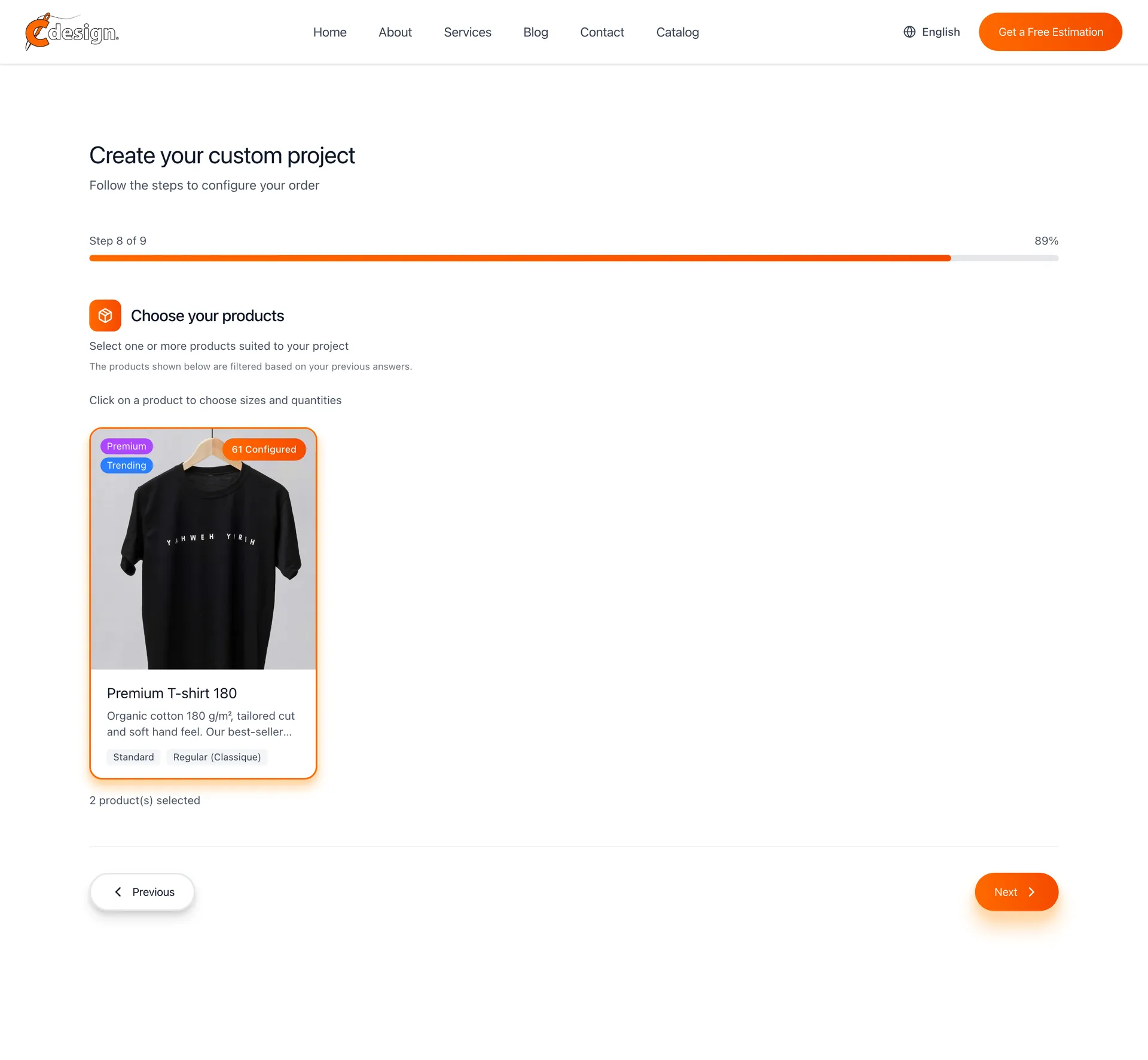
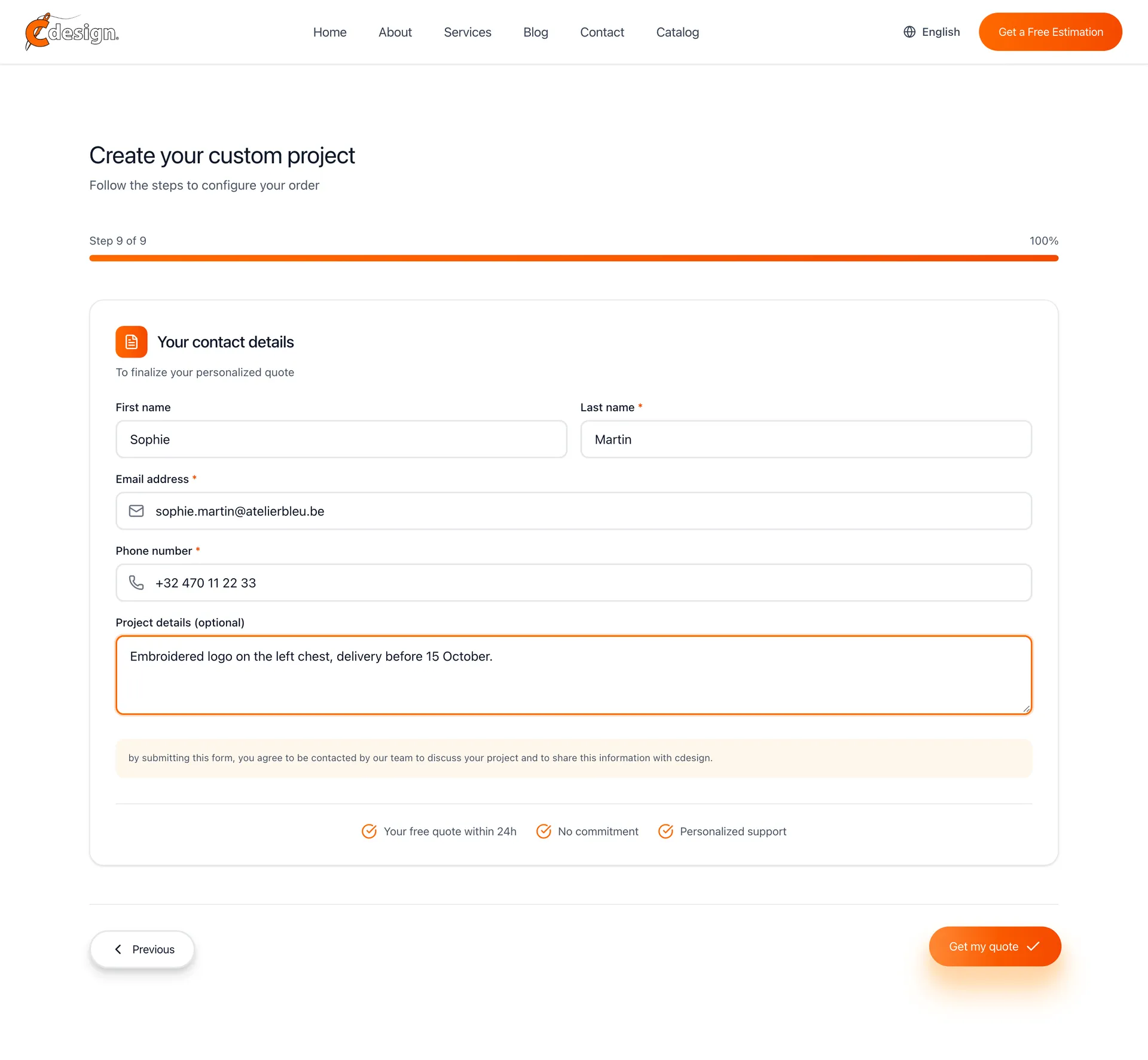
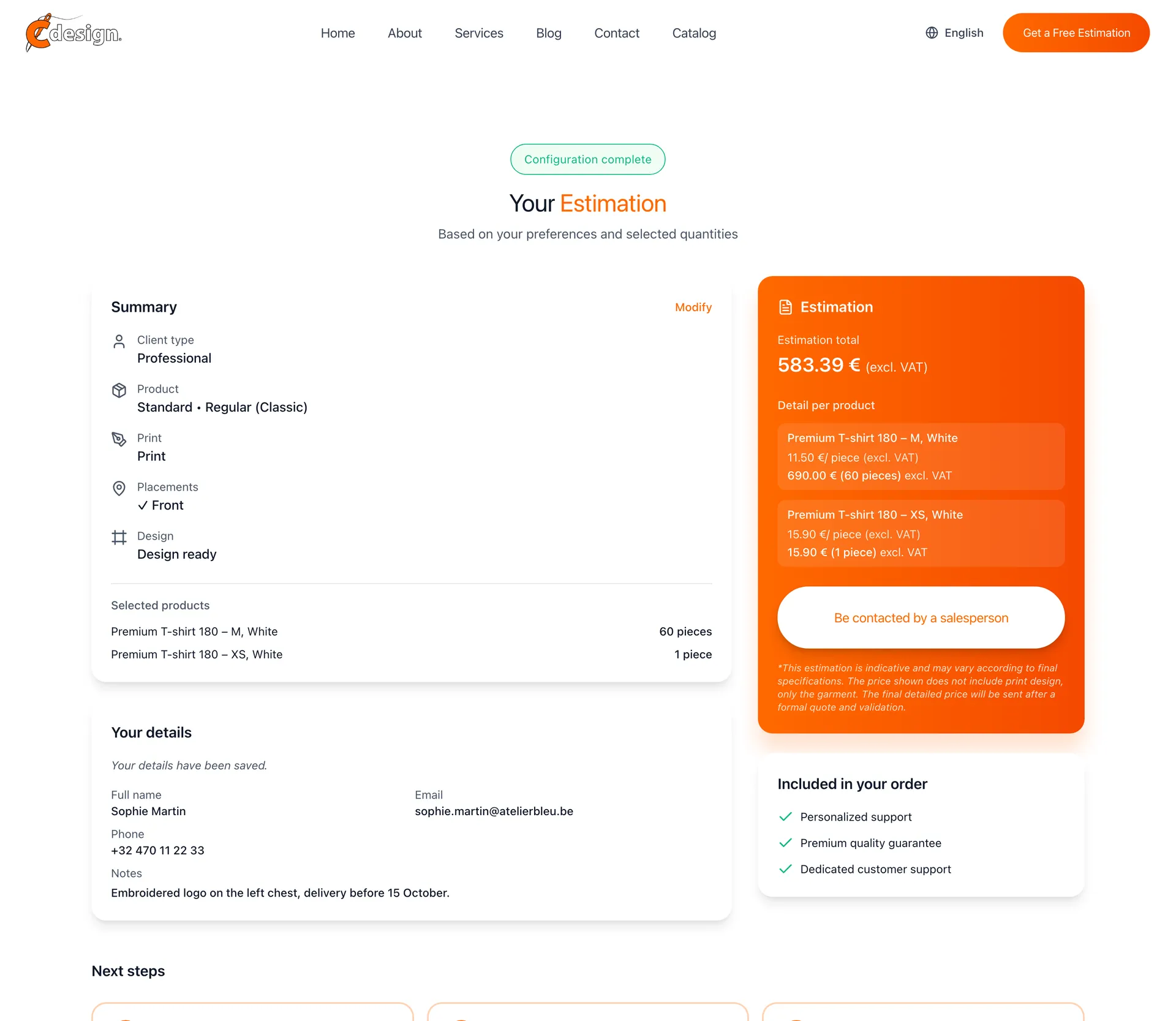
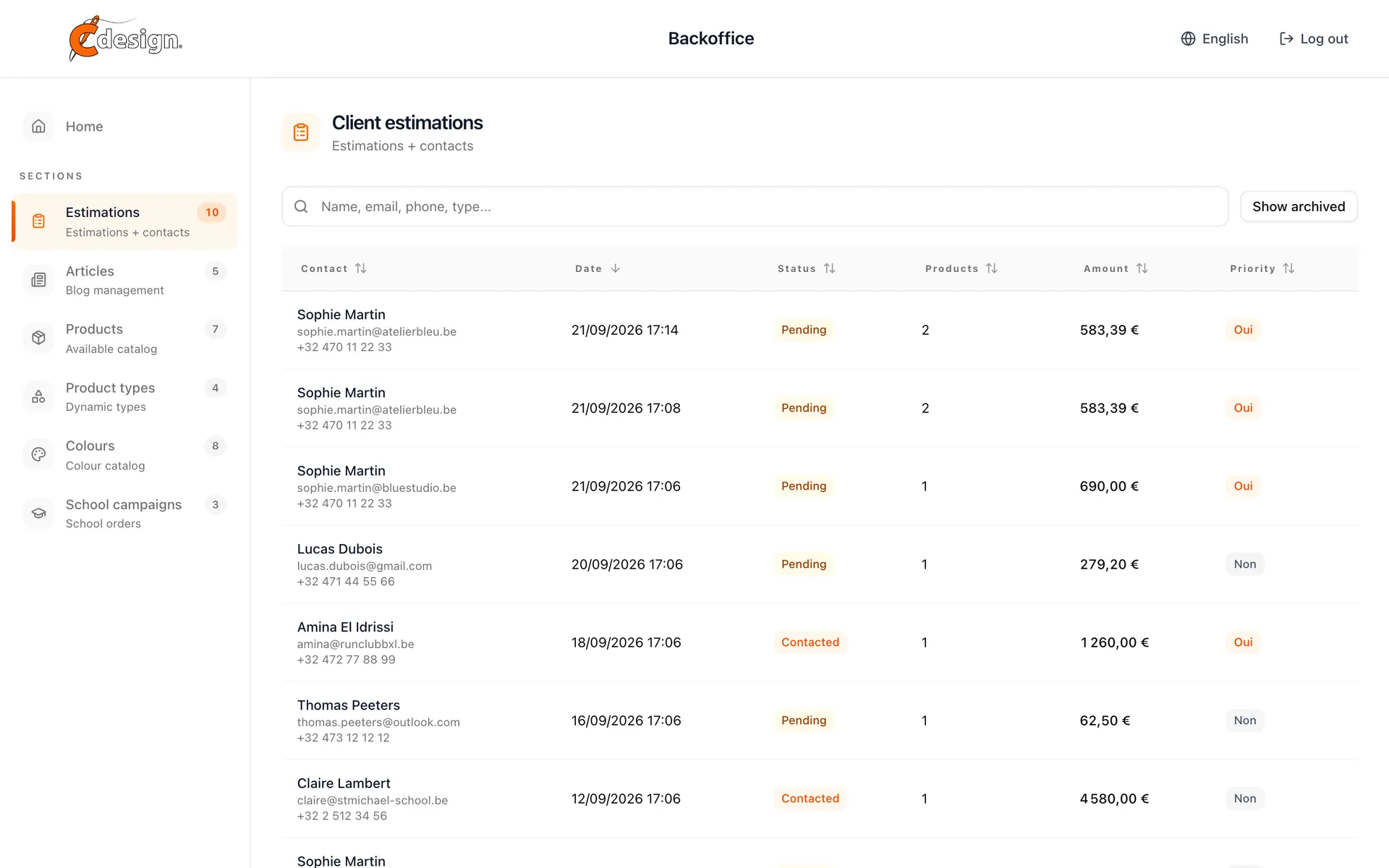
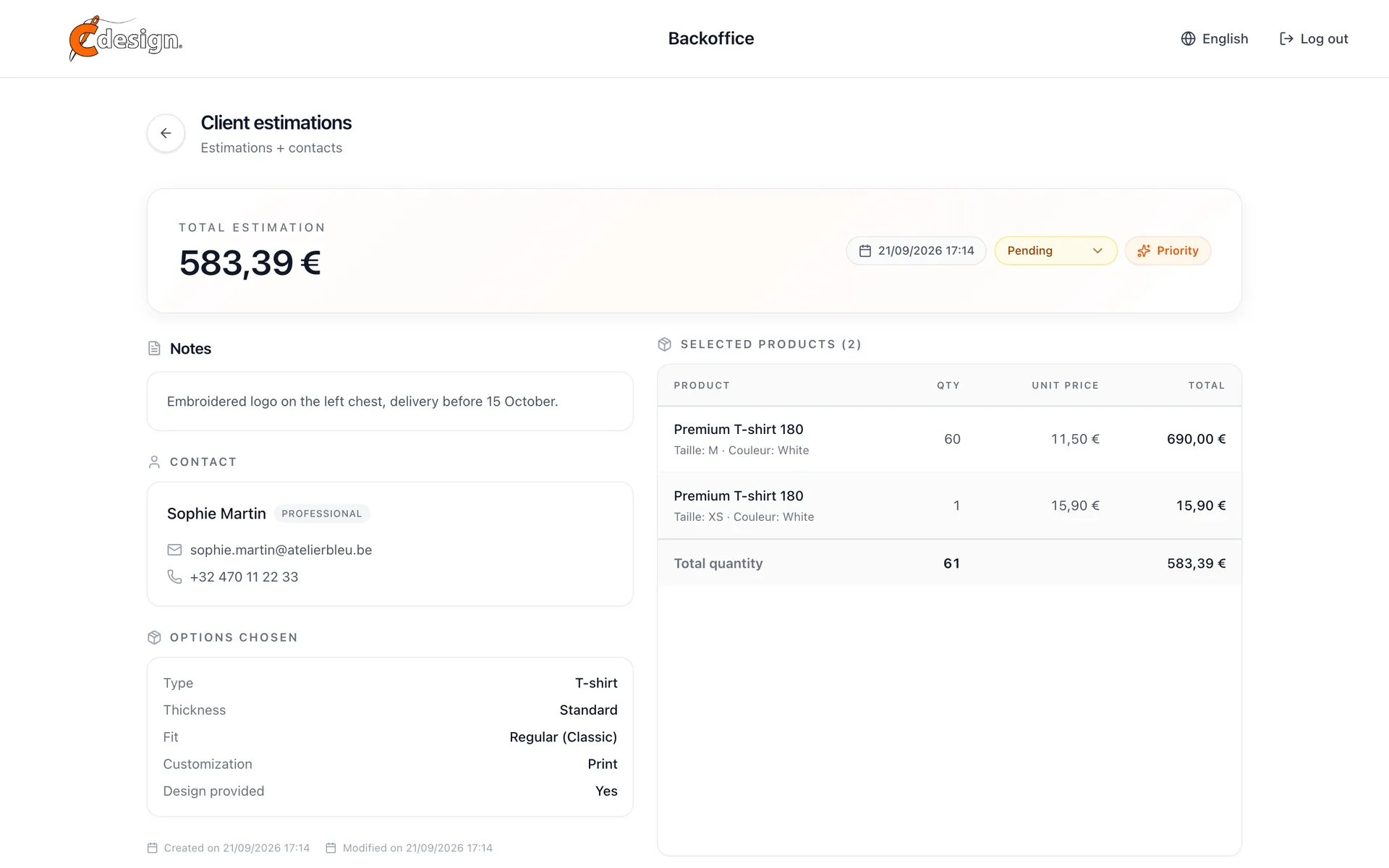
Customers were dropping off before buying because every estimate needed a phone call. Nine questions later they have a price computed from the catalogue, and the workshop has a qualified lead with the whole configuration attached.


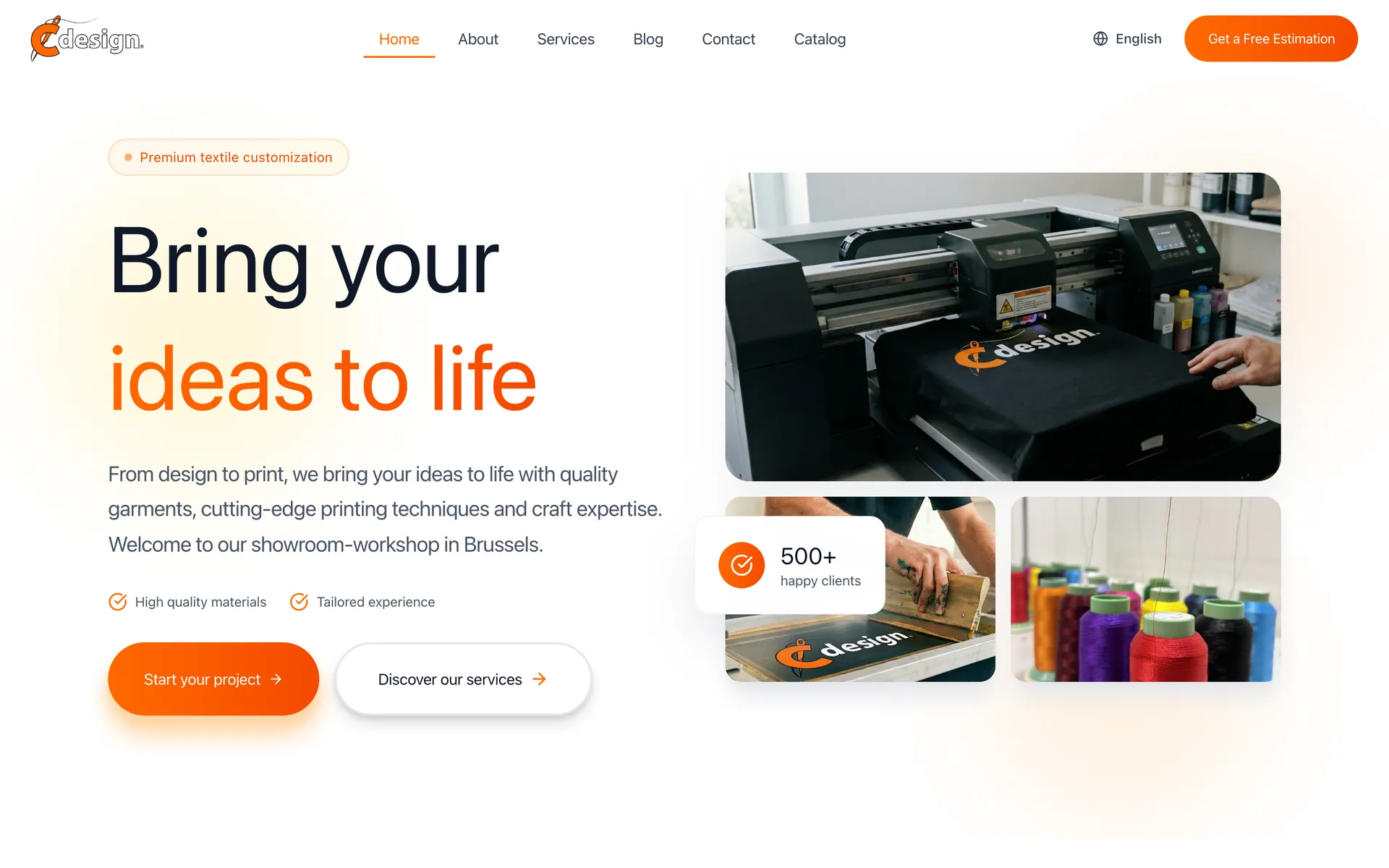
A website and back office for C Design, a textile customisation workshop in Brussels, built for a real client and in production today. Since launch the number of leads went up 40%.
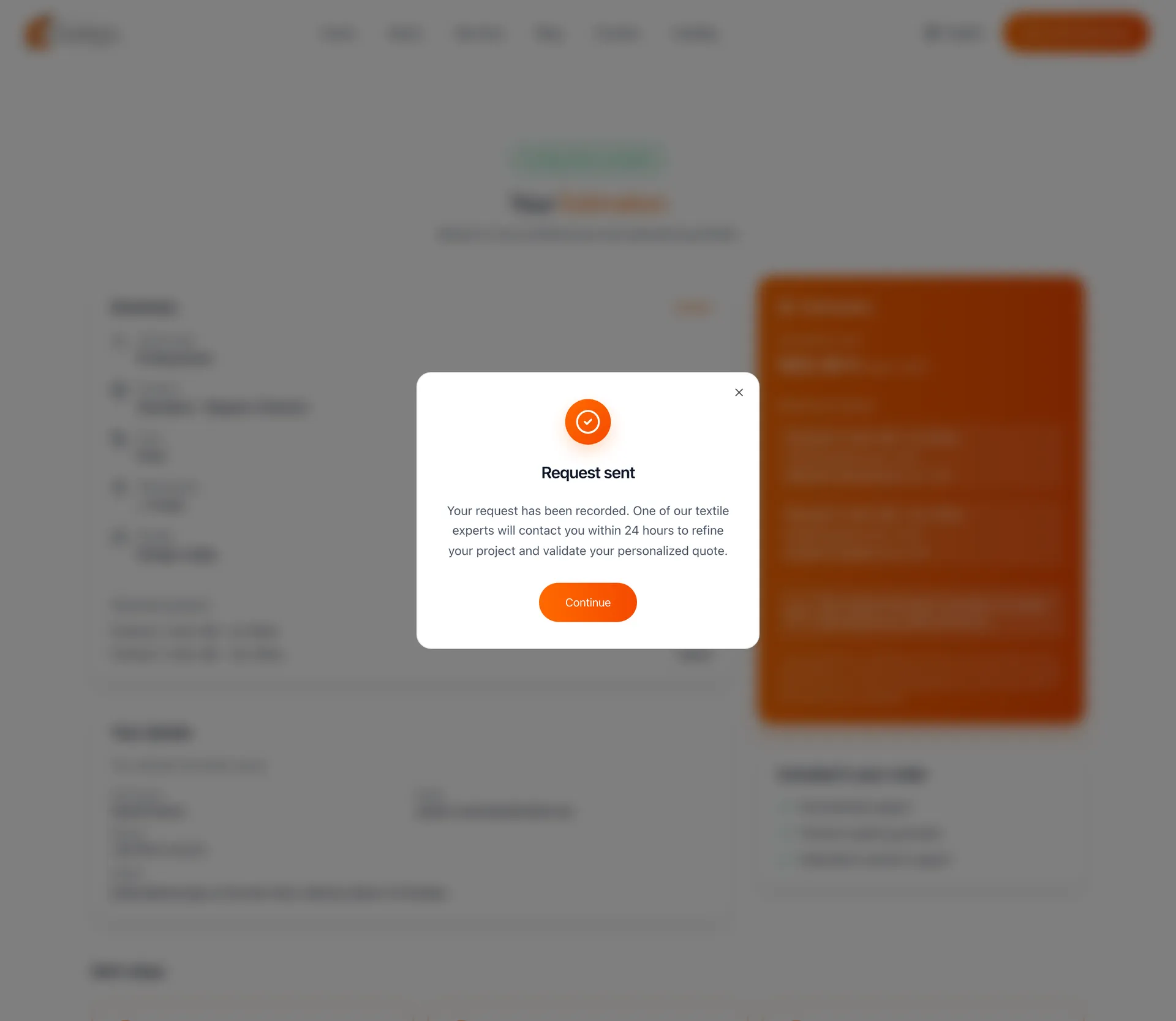
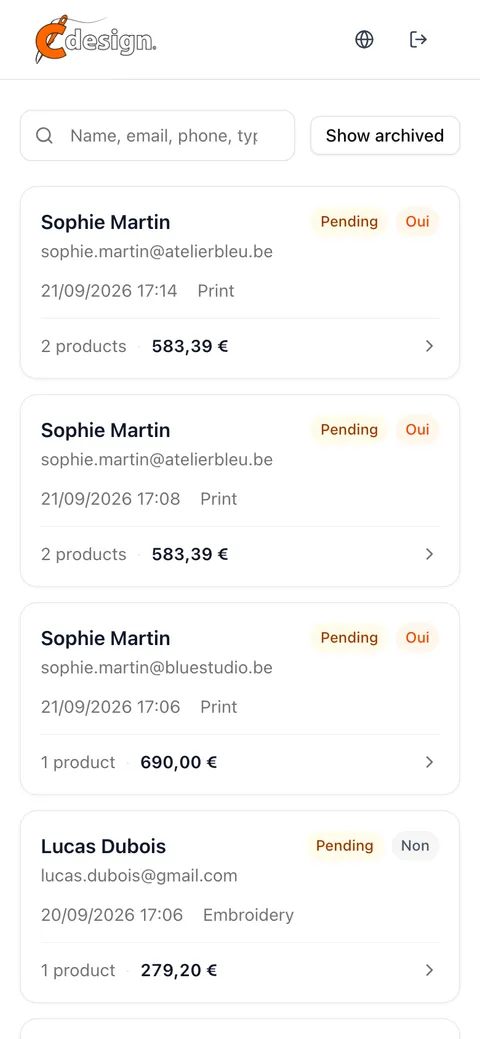
The client was losing customers before the sale: every estimate needed a phone call and a manual quote. I proposed and built a nine-step quoting engine where the customer configures the garment, the print and the quantities and gets a price on the spot. Each estimate lands in the back office as a qualified lead with the full configuration attached.
Two of us built it, one other developer and me, and we delivered from concept to handover in under two months. I was the only technical decision maker: architecture, schema, deployment. Next.js in French, Dutch and English over a REST API on Node, Express, Prisma and Postgres, with school campaigns paid online through Mollie.

Reported by the client, comparing enquiries received after the launch with the months before it.
Project dates on the CV, February to March 2026, with a team of two.
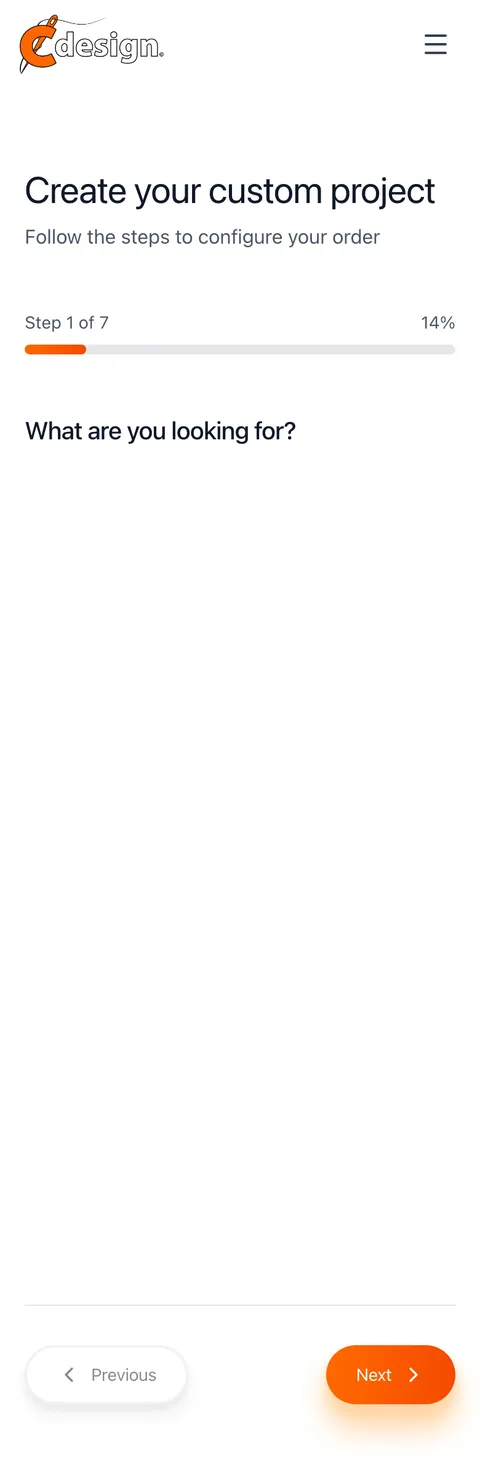
Garment type, weight, fit, technique, placement, design, client type, products and contact. One question per screen.
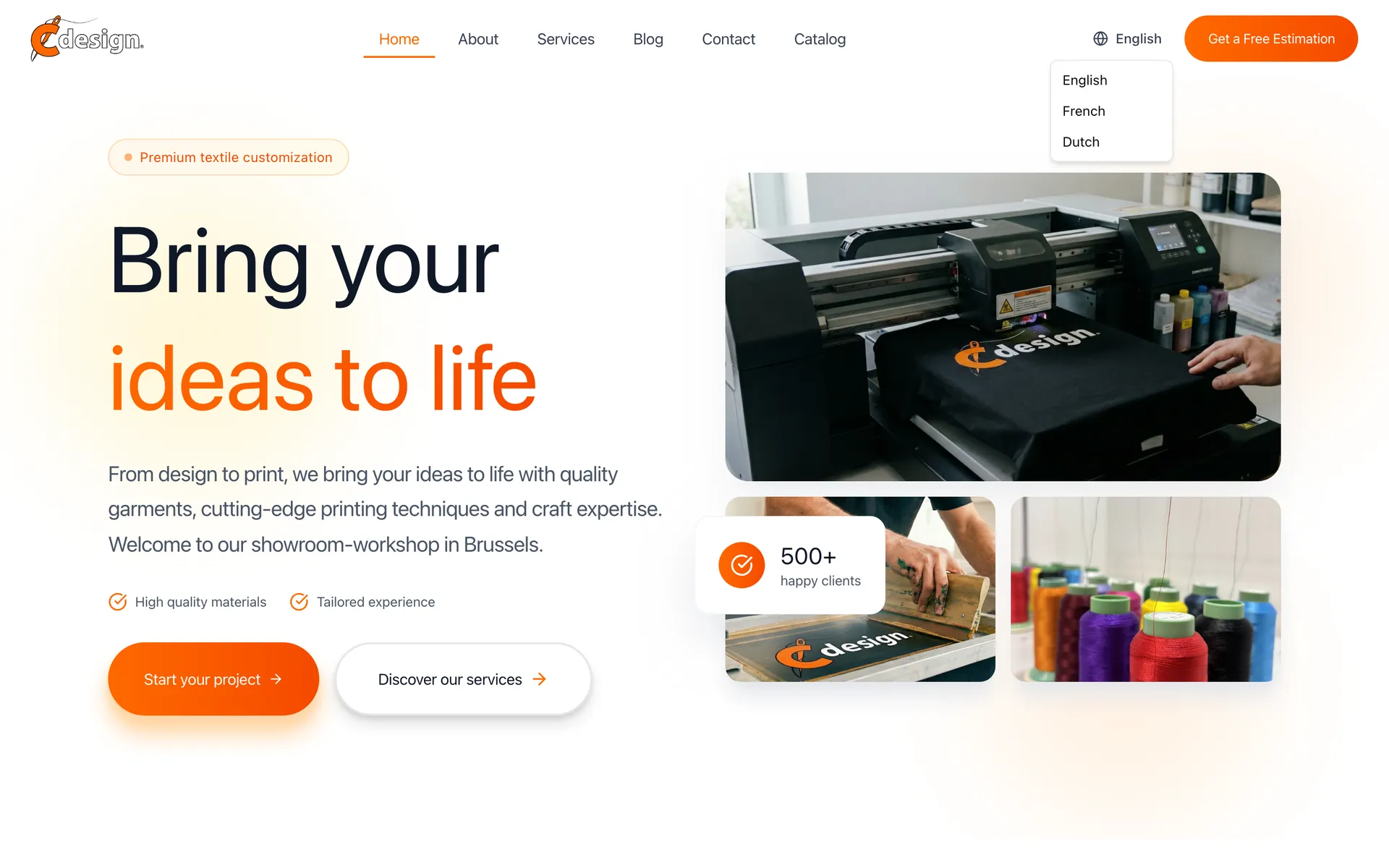
French, Dutch and English, switchable on every page including the back office.
Customers were dropping off before buying because every estimate needed a phone call. Nine questions later they have a price computed from the catalogue, and the workshop has a qualified lead with the whole configuration attached.


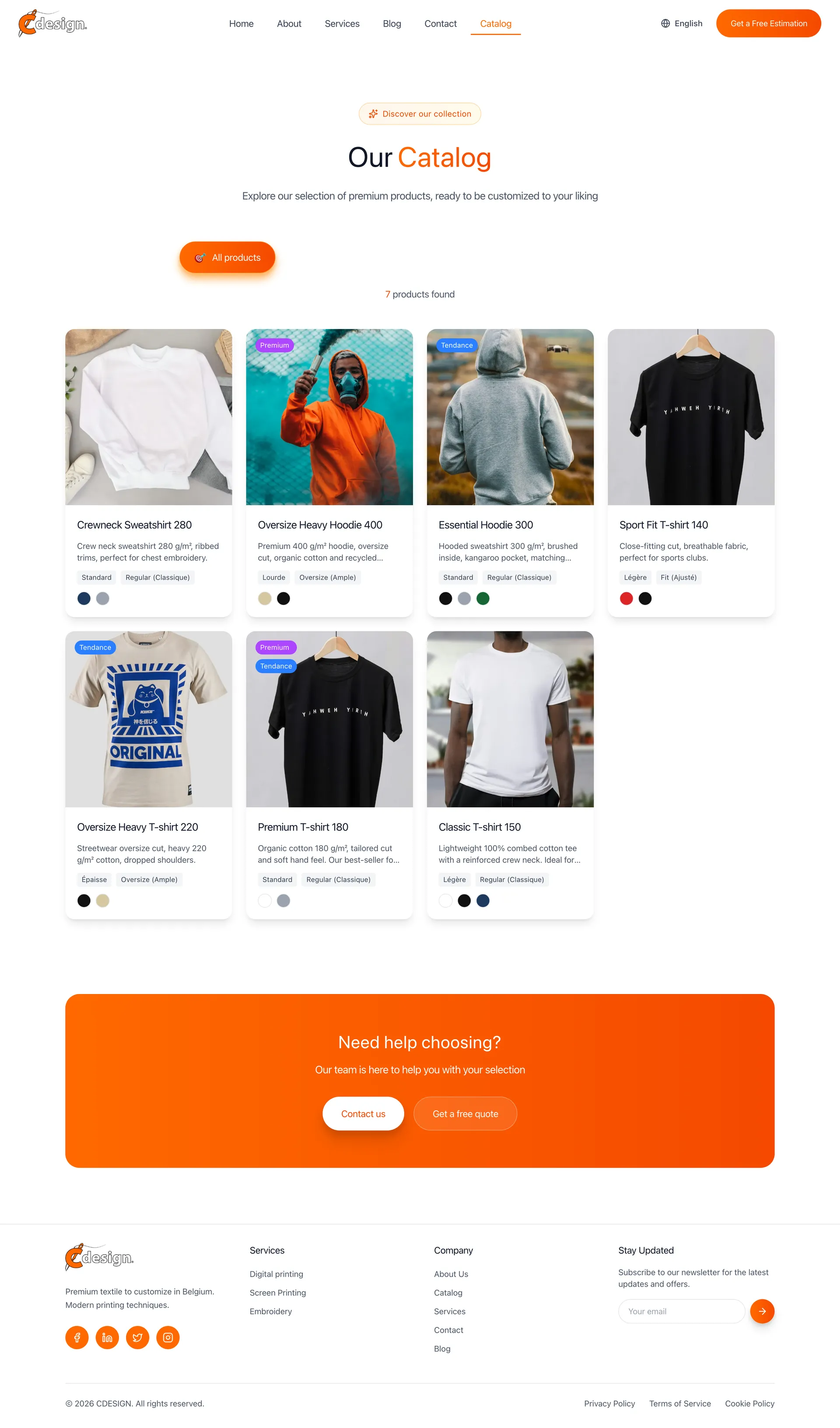
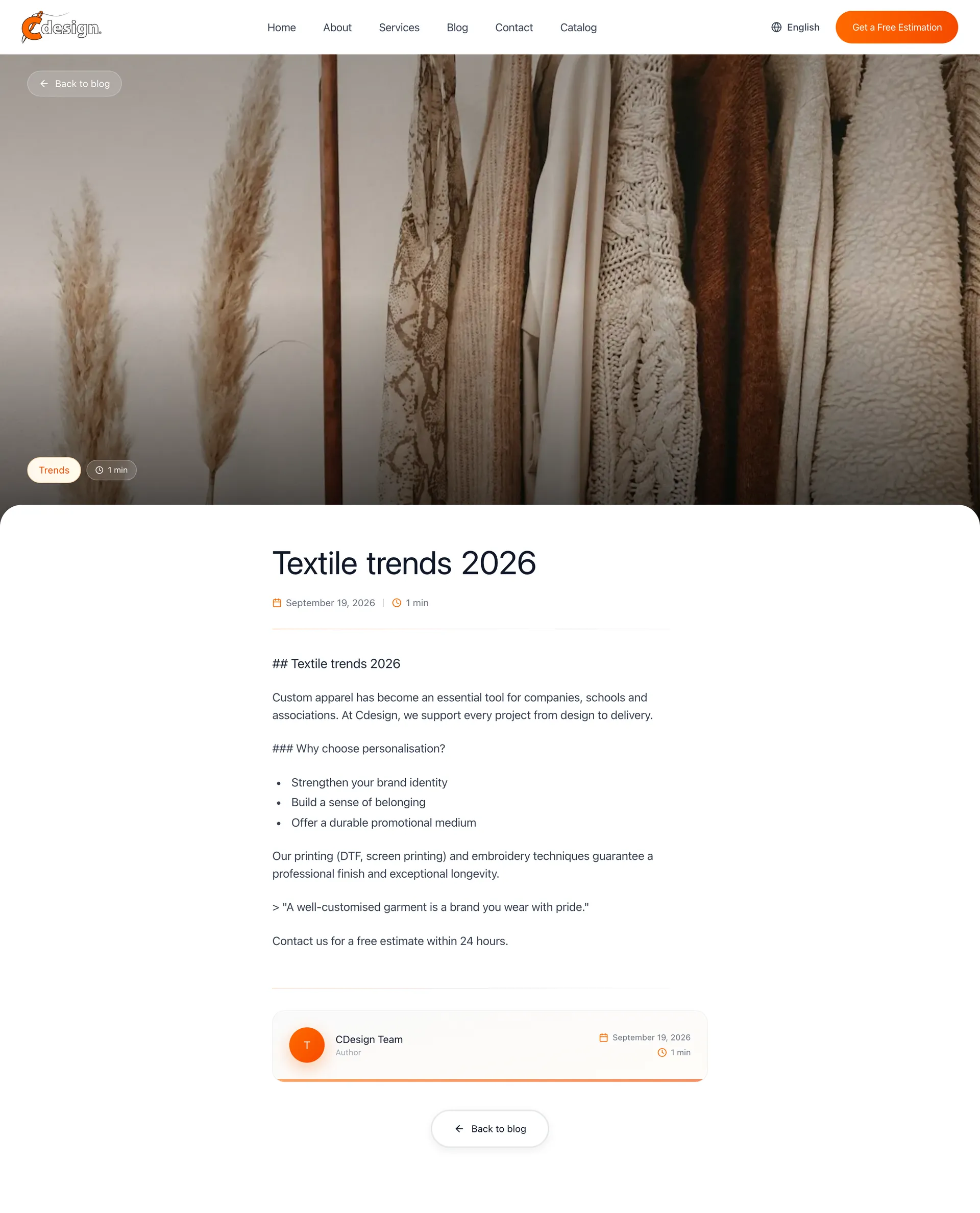
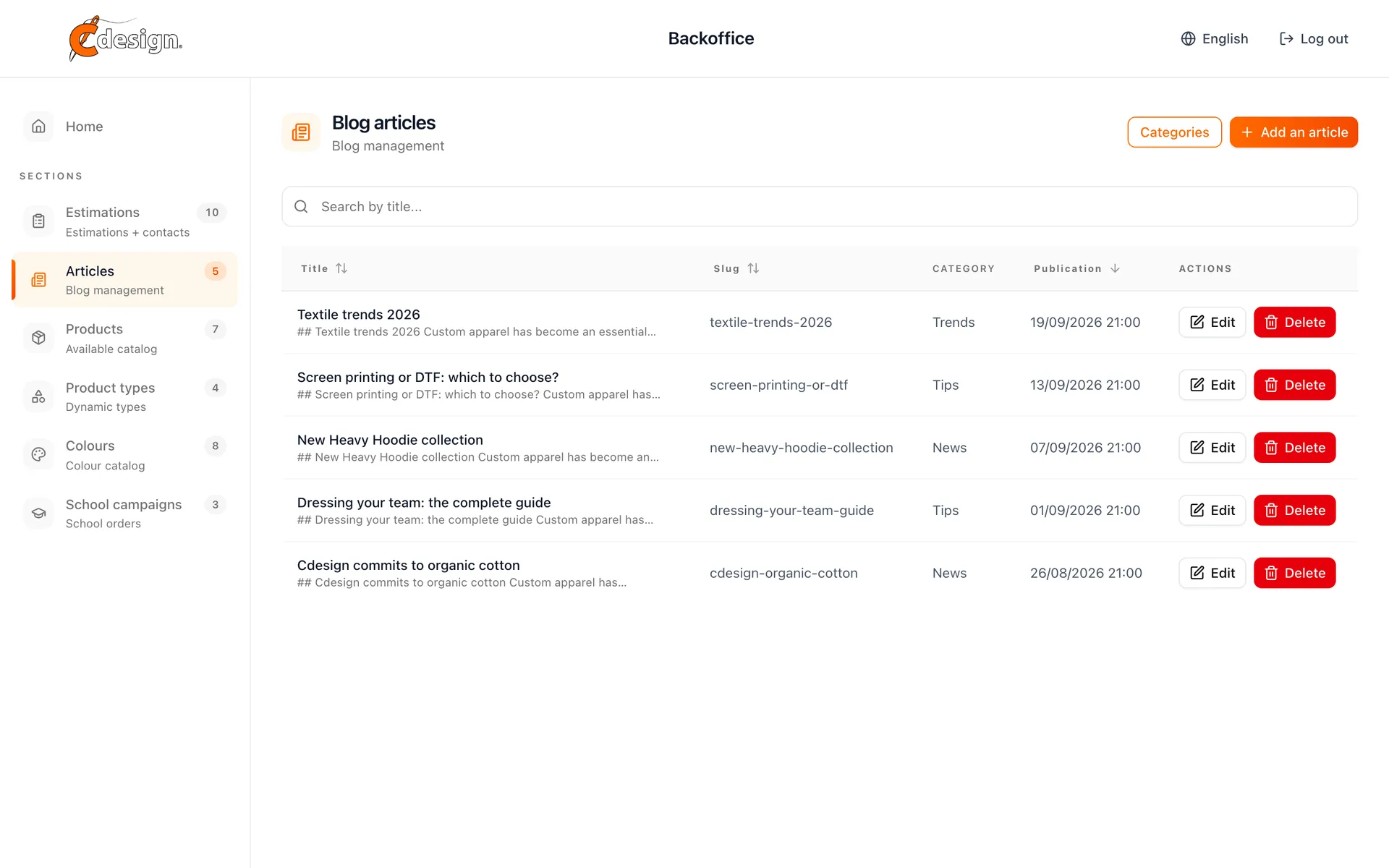
Brussels speaks French, Dutch and English, so the site does too. Landing, services, catalogue and a blog the client writes from the back office.


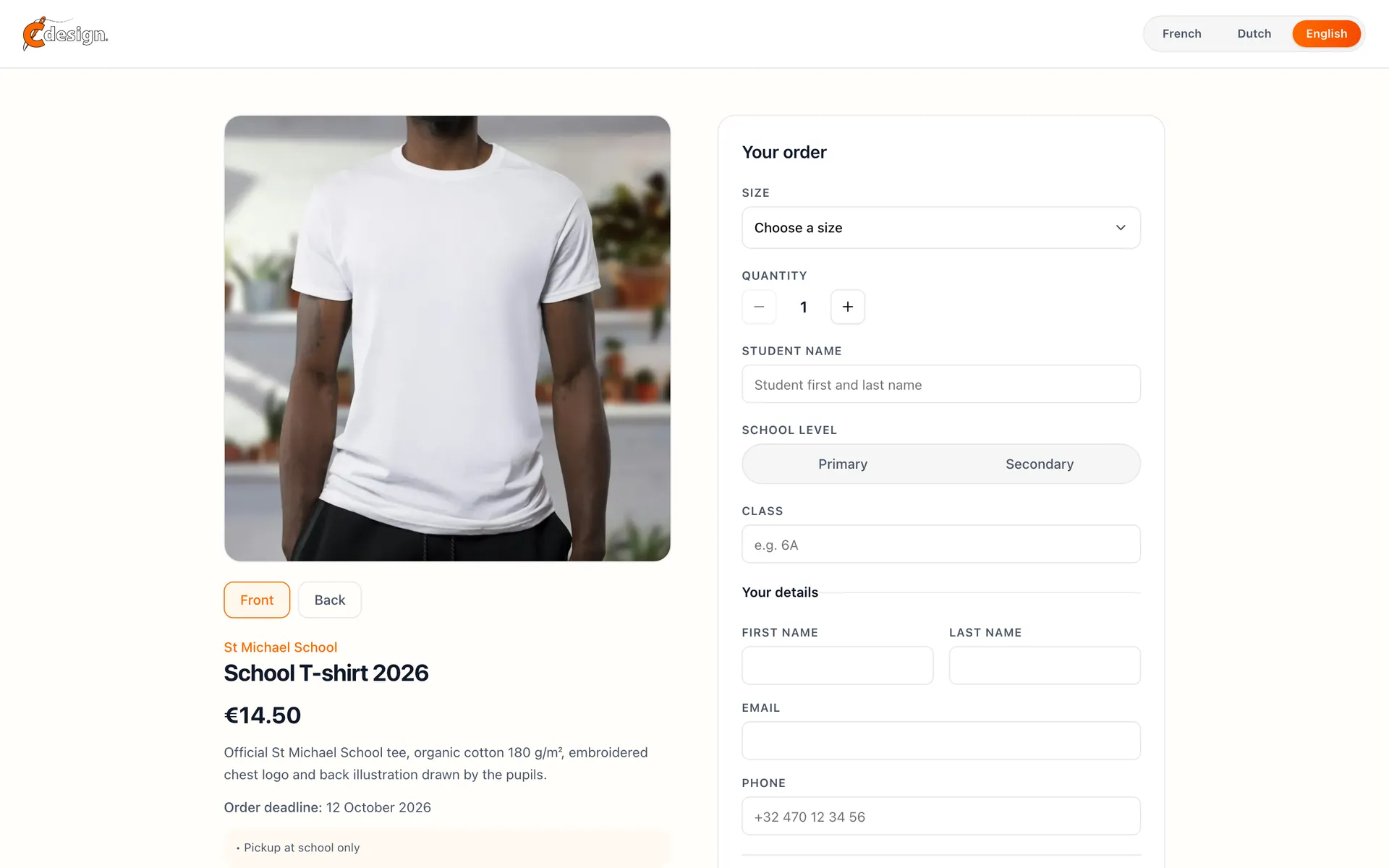
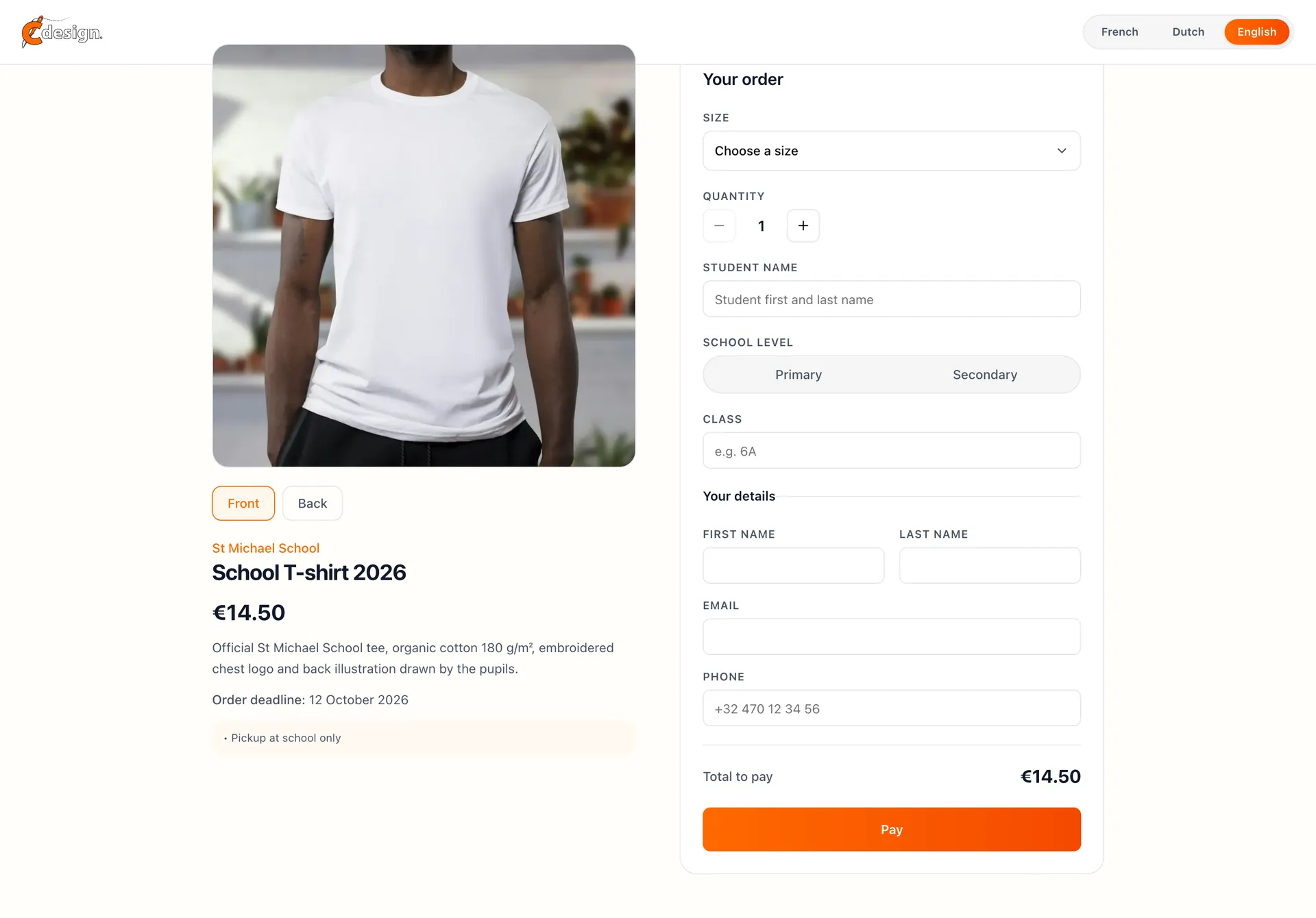
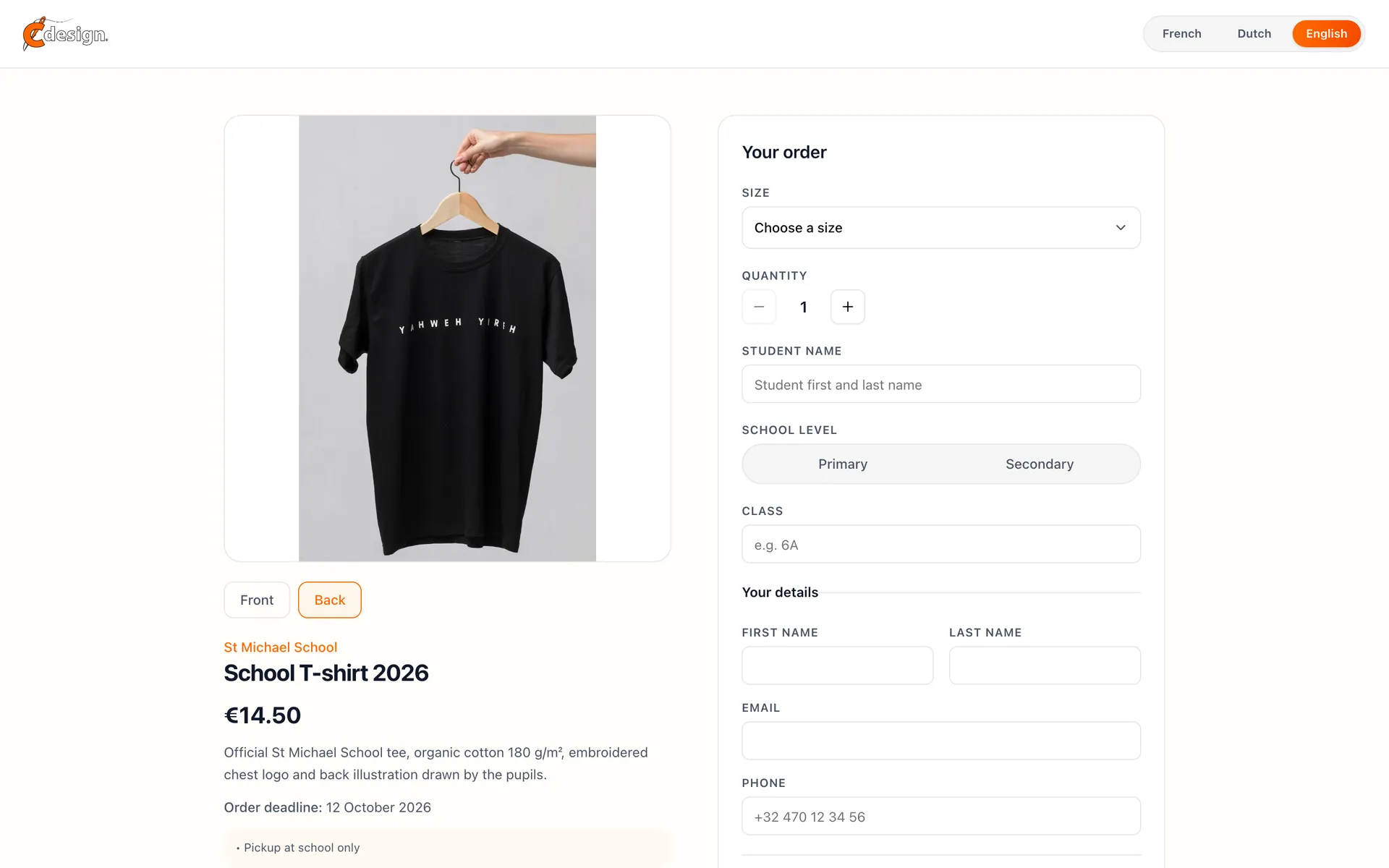
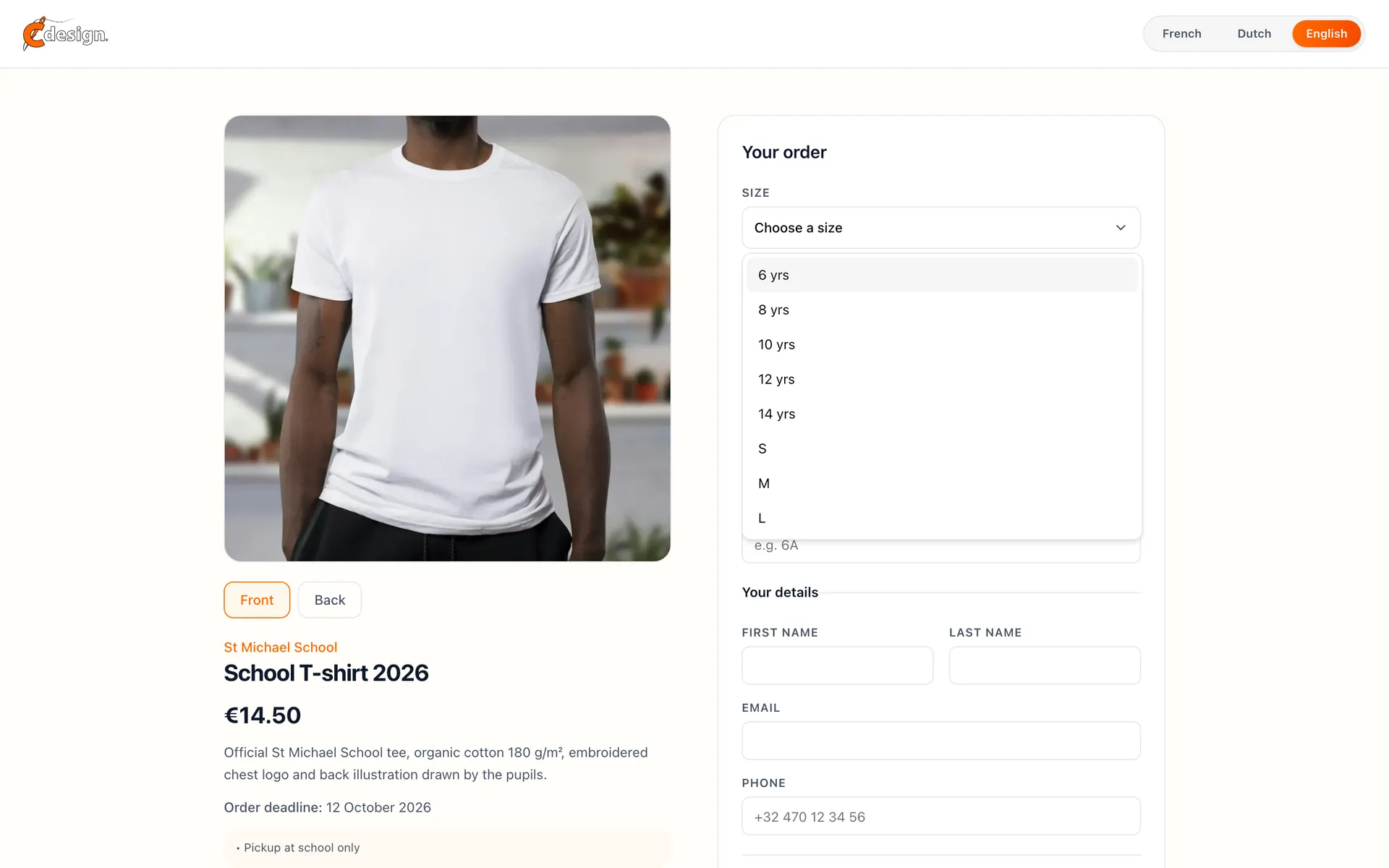
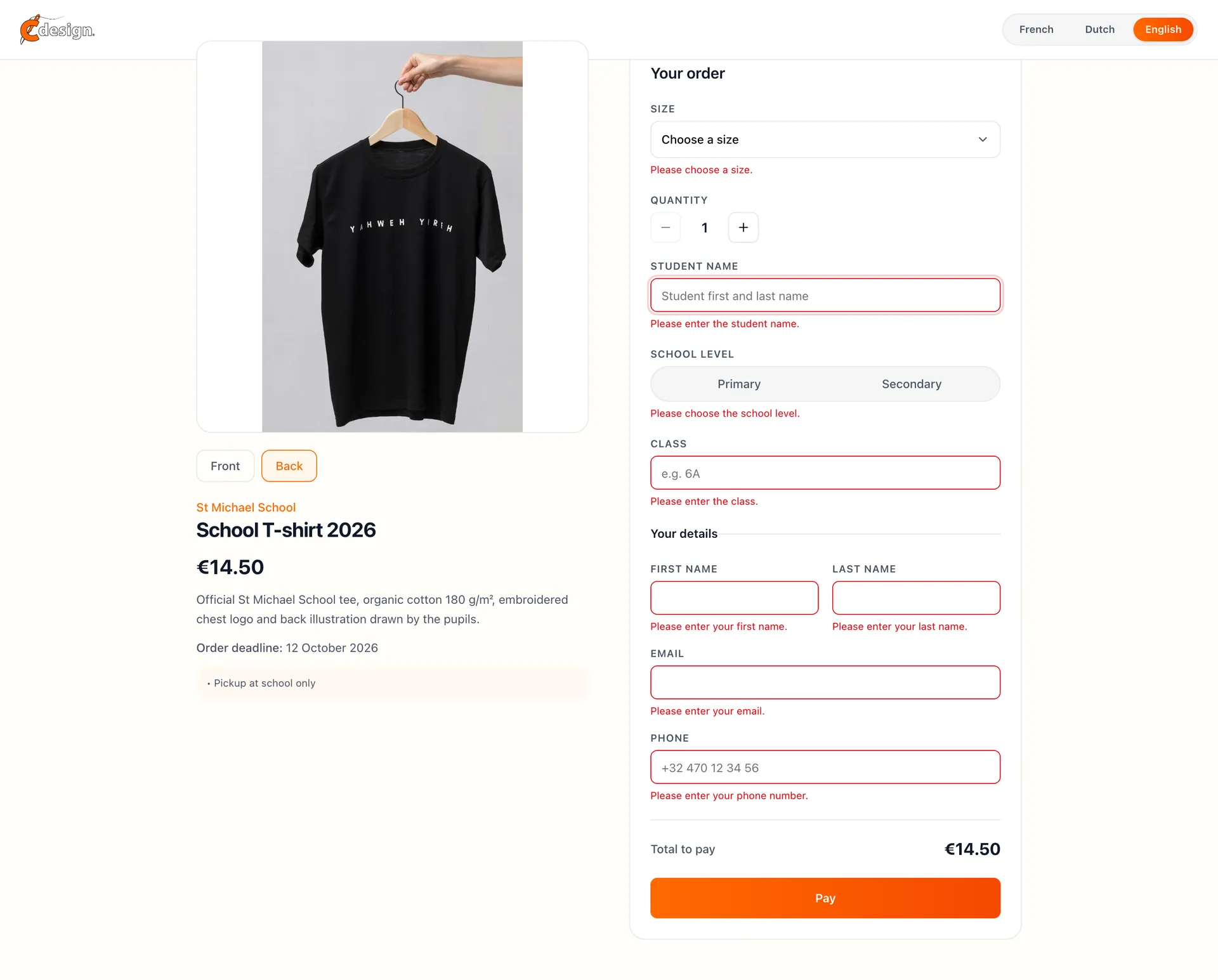
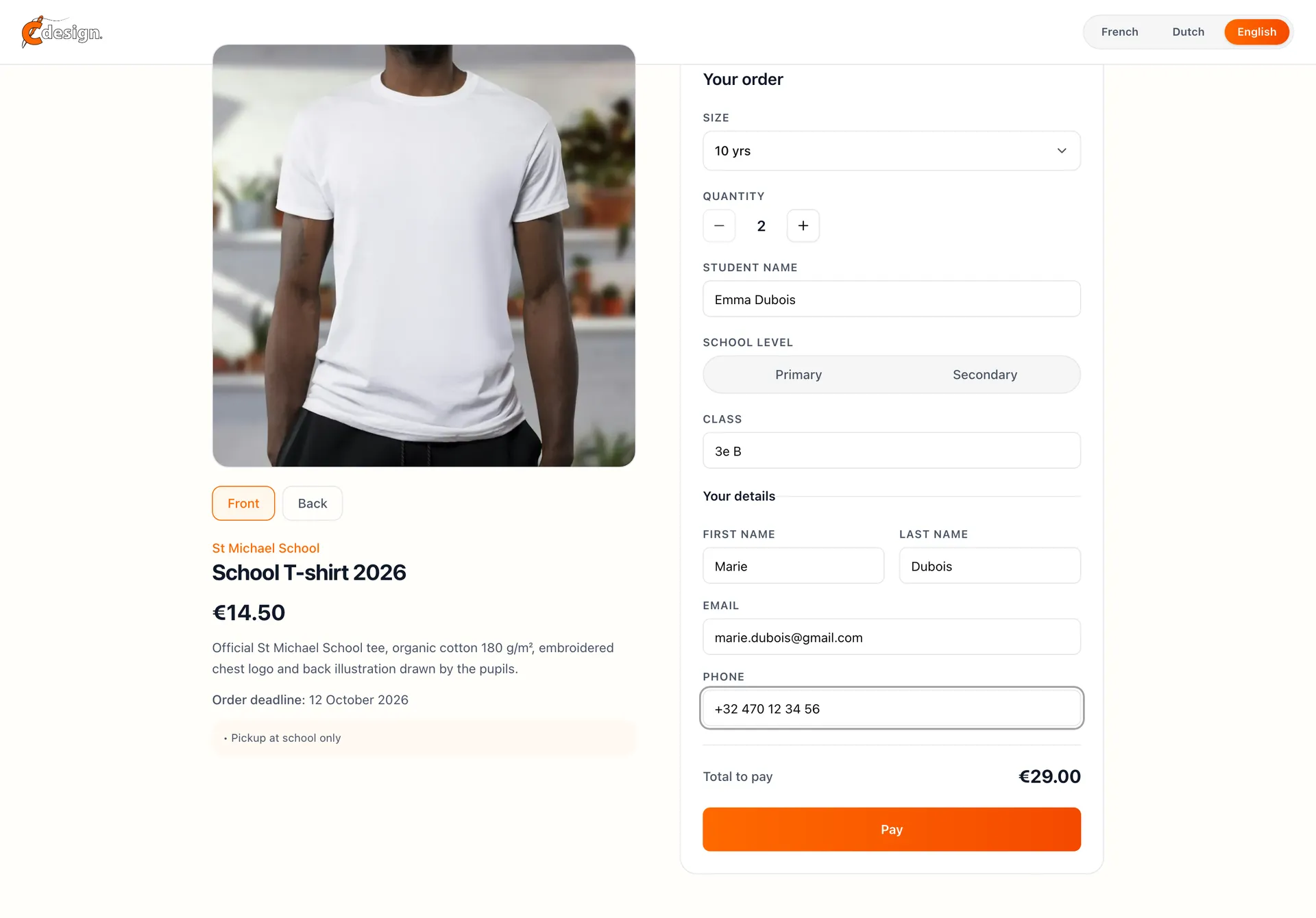
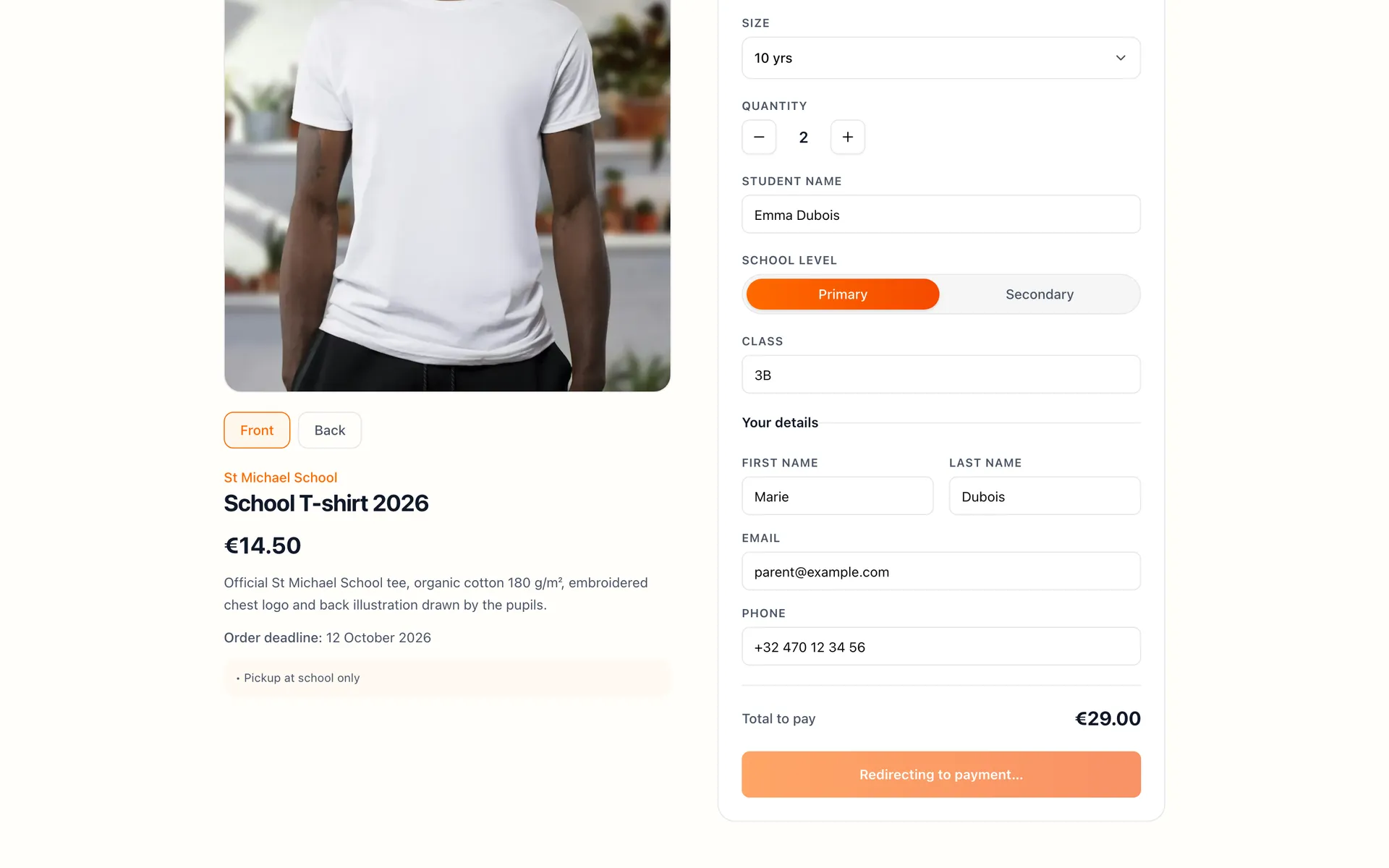
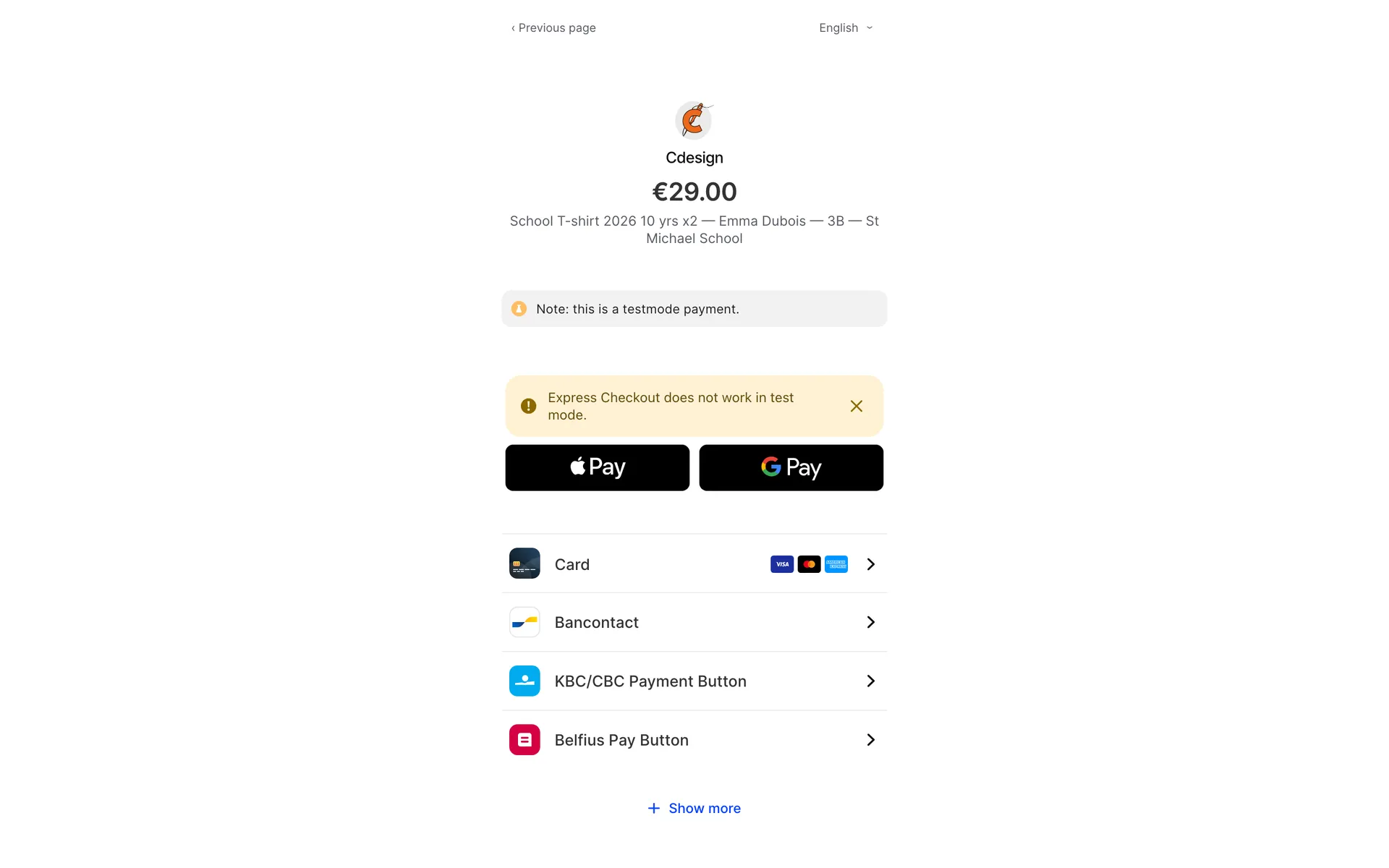
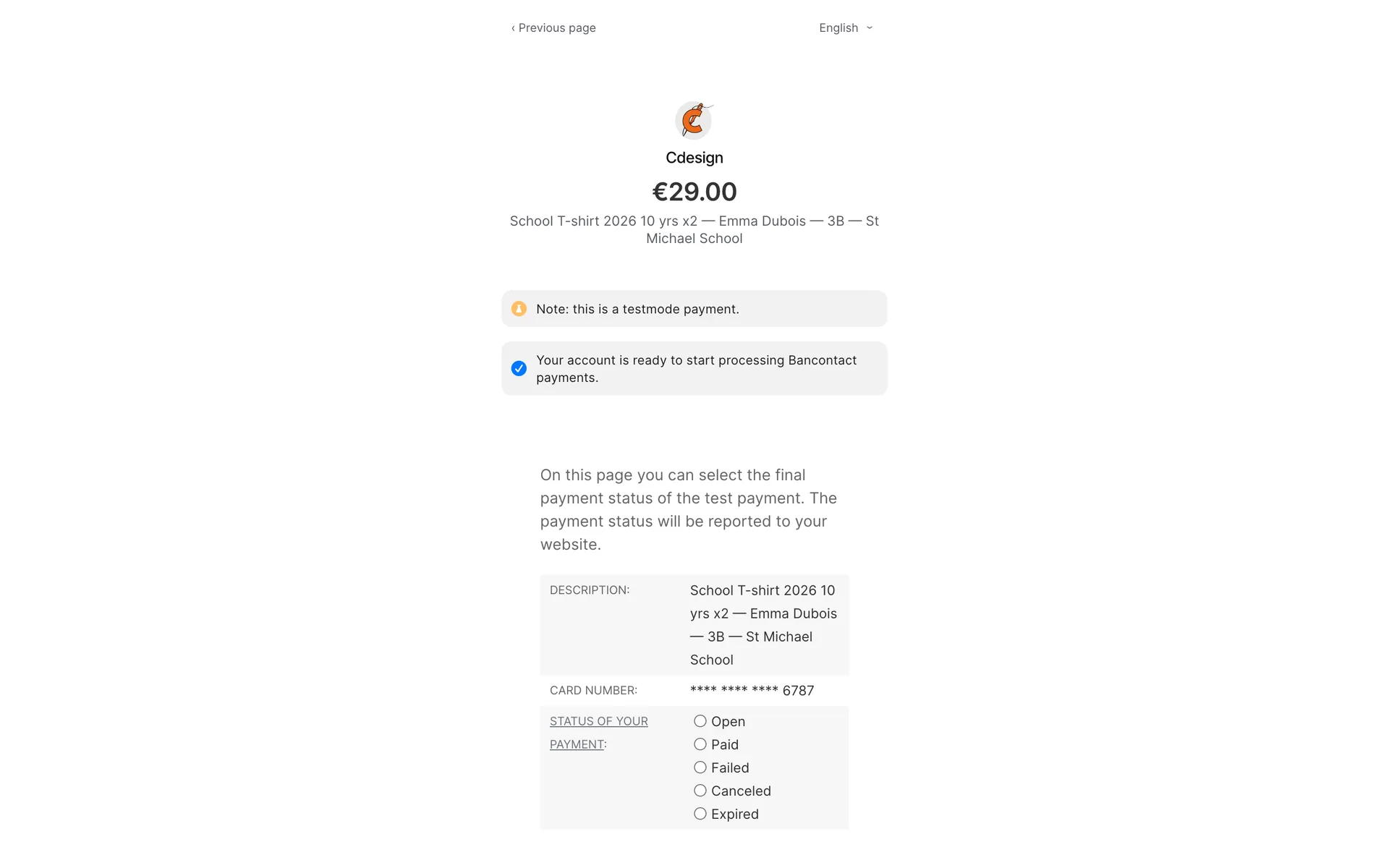
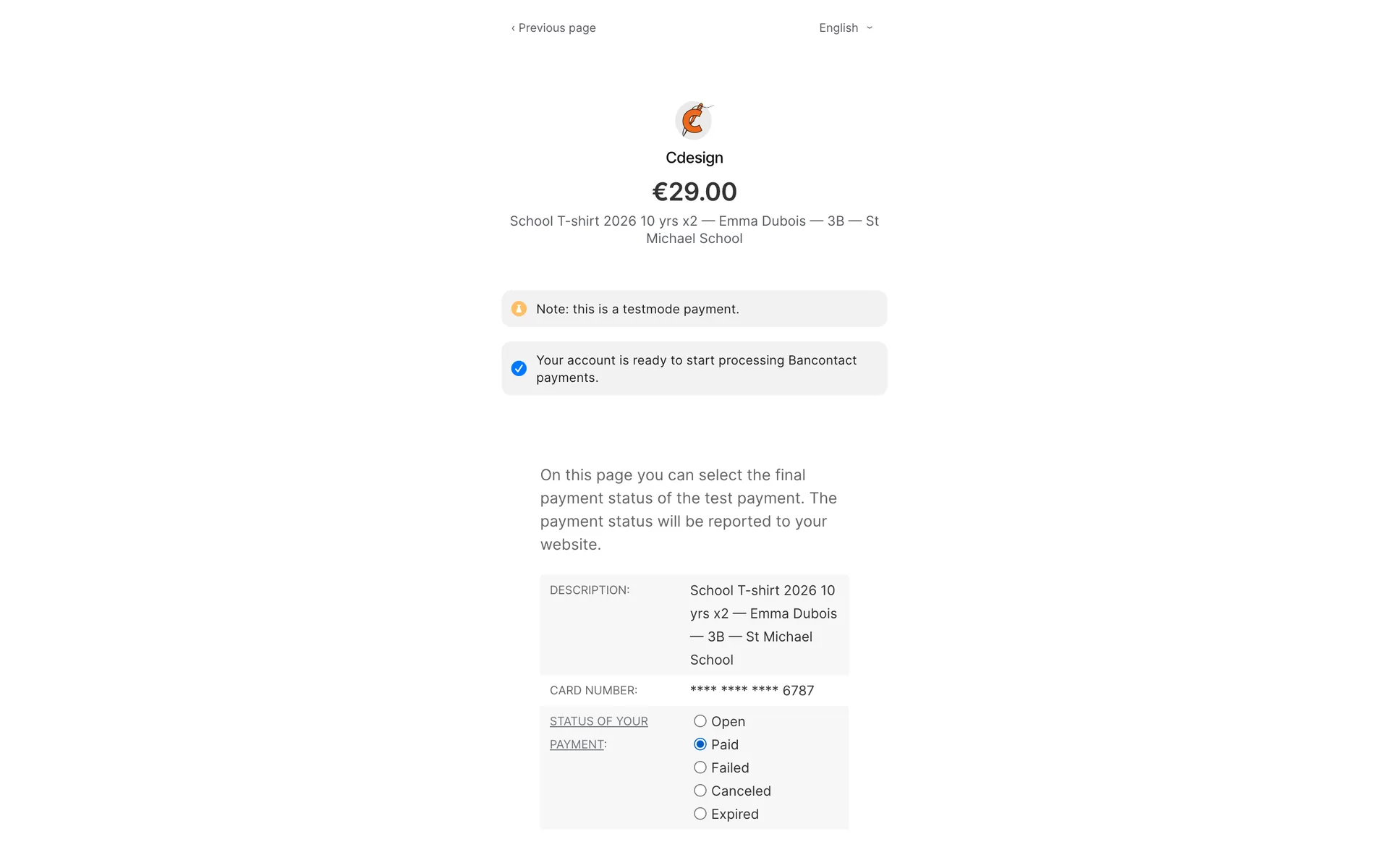
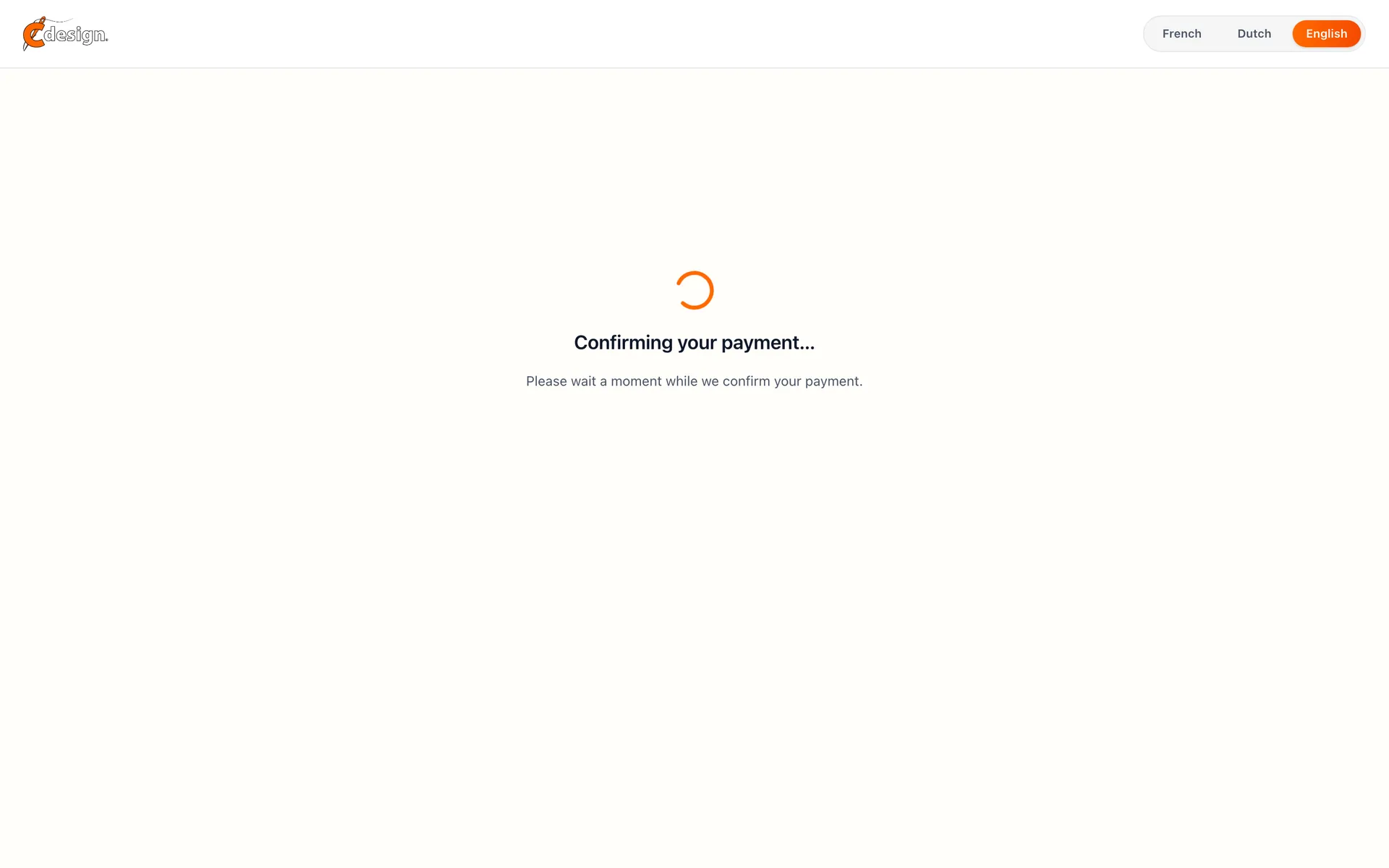
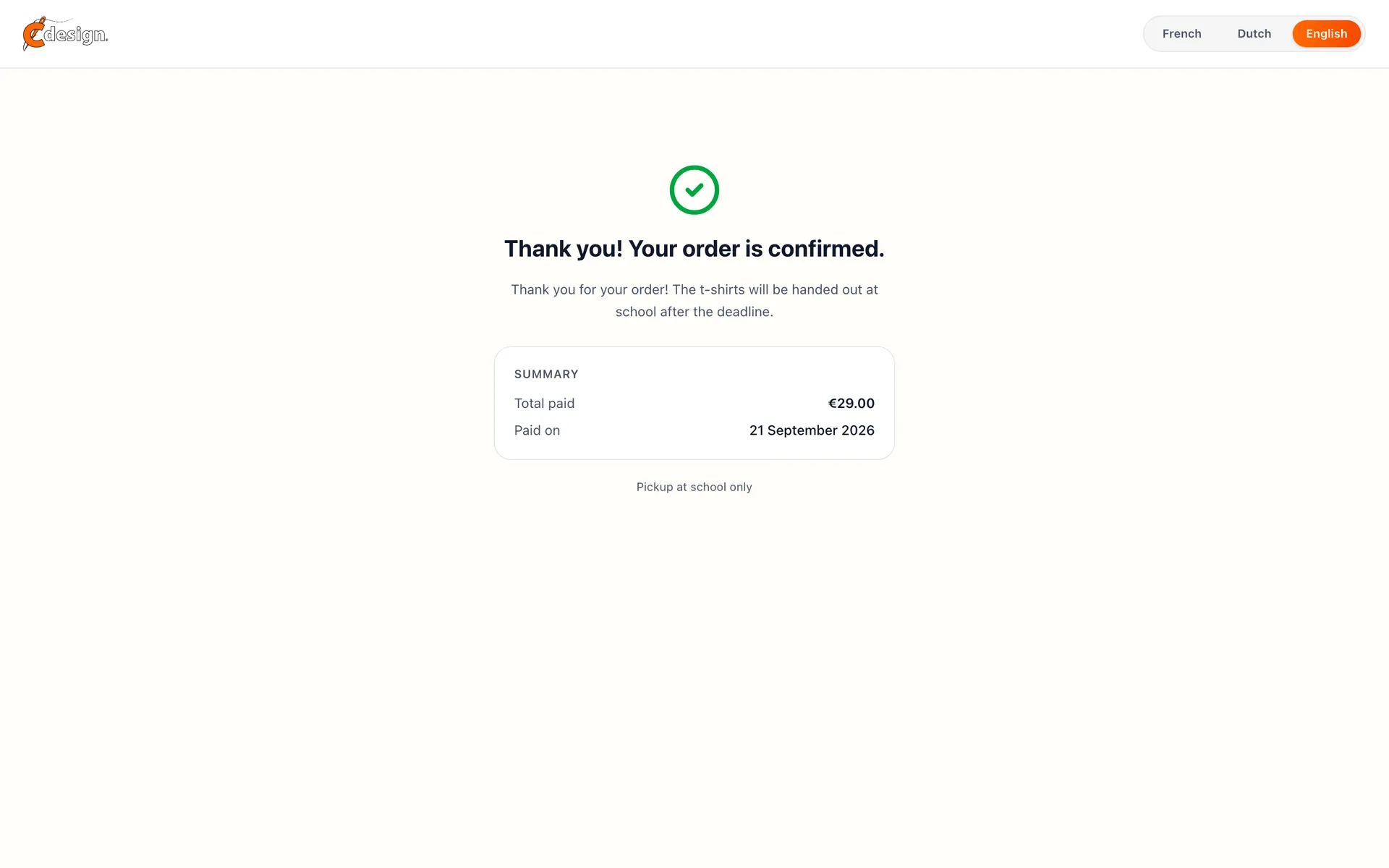
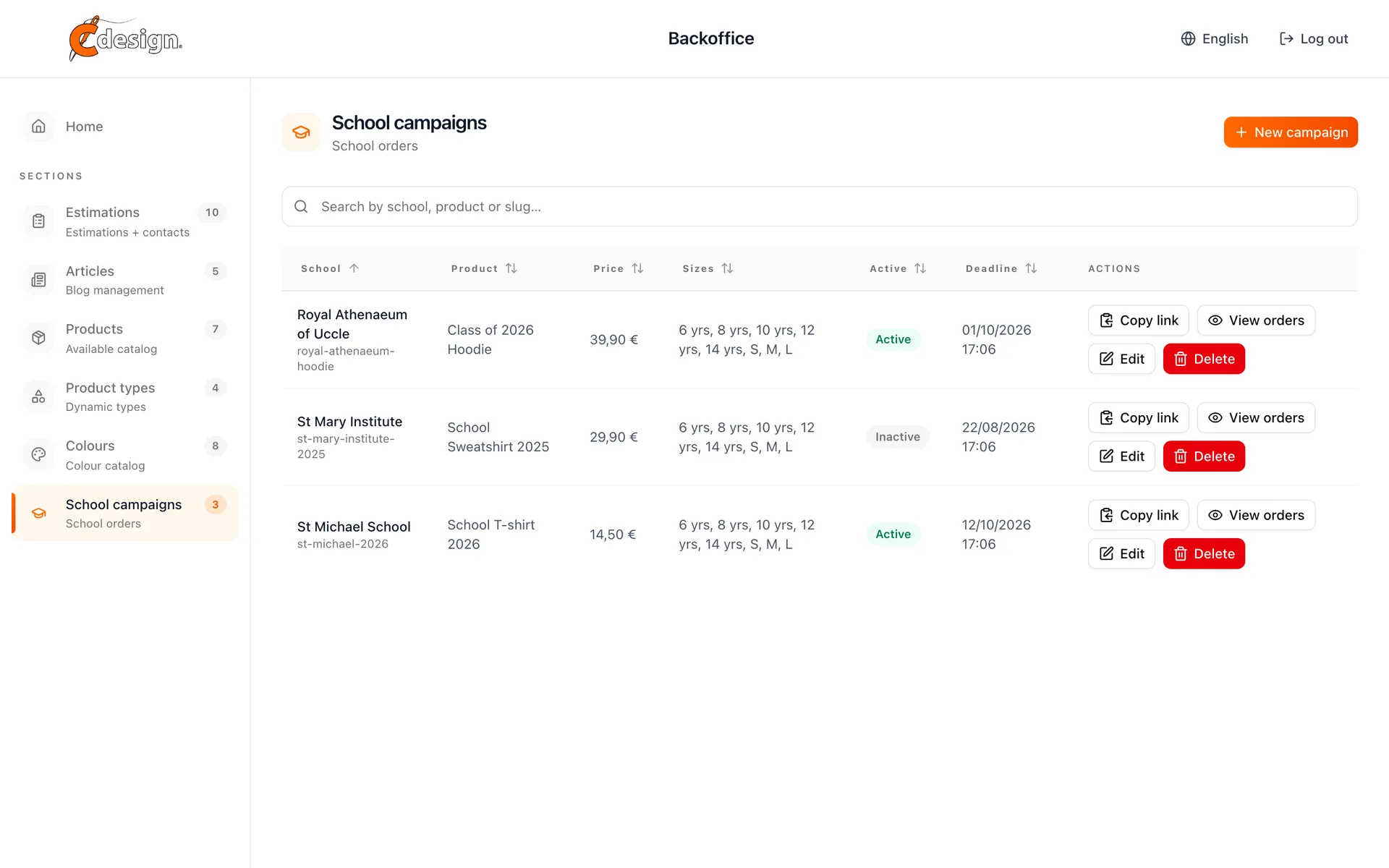
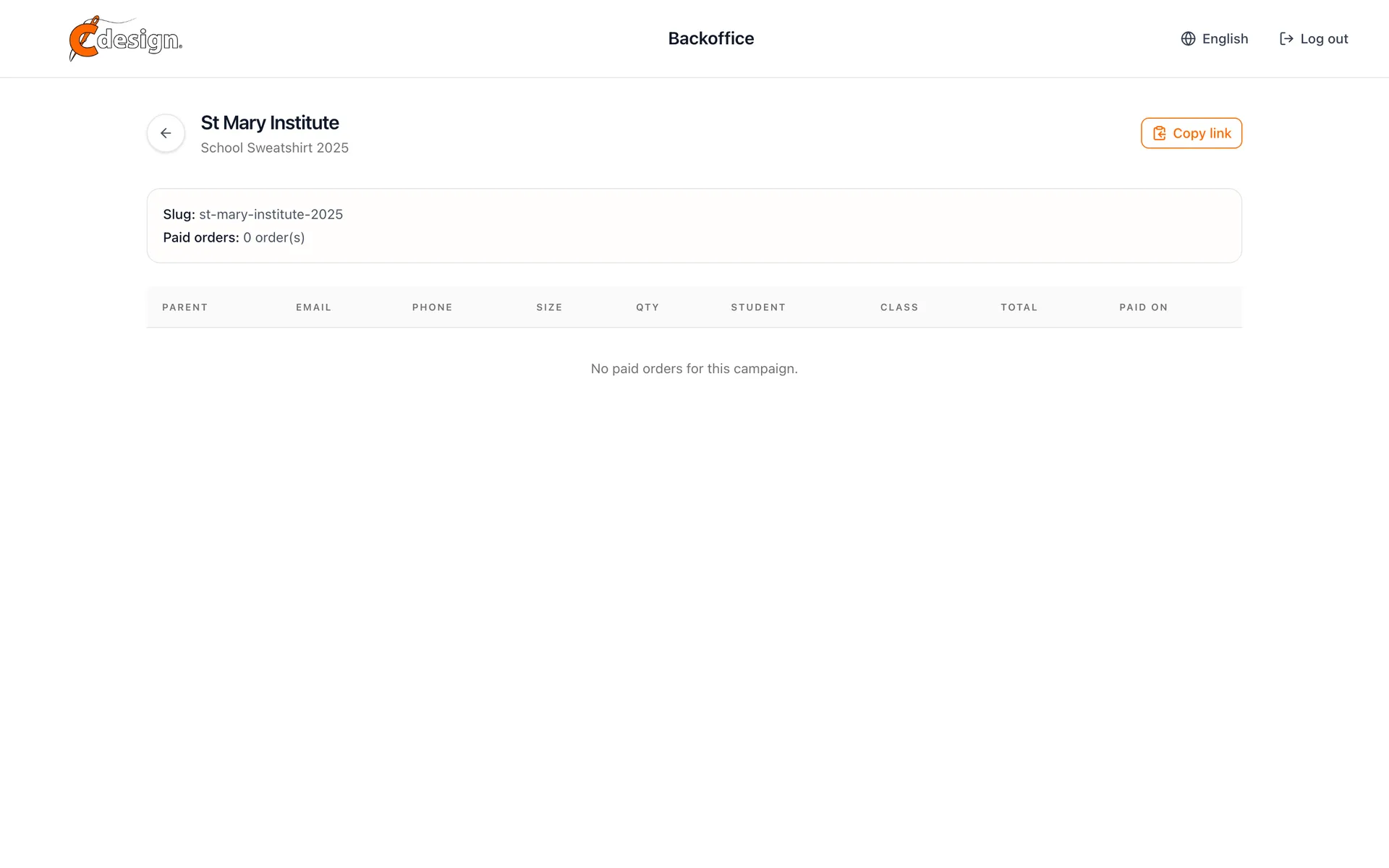
A campaign page per school. Parents pick a size, name the pupil and pay through a Mollie-hosted checkout; a webhook confirms the order and the thank-you page waits for it. The workshop sees the orders per campaign instead of collecting envelopes at the gate.


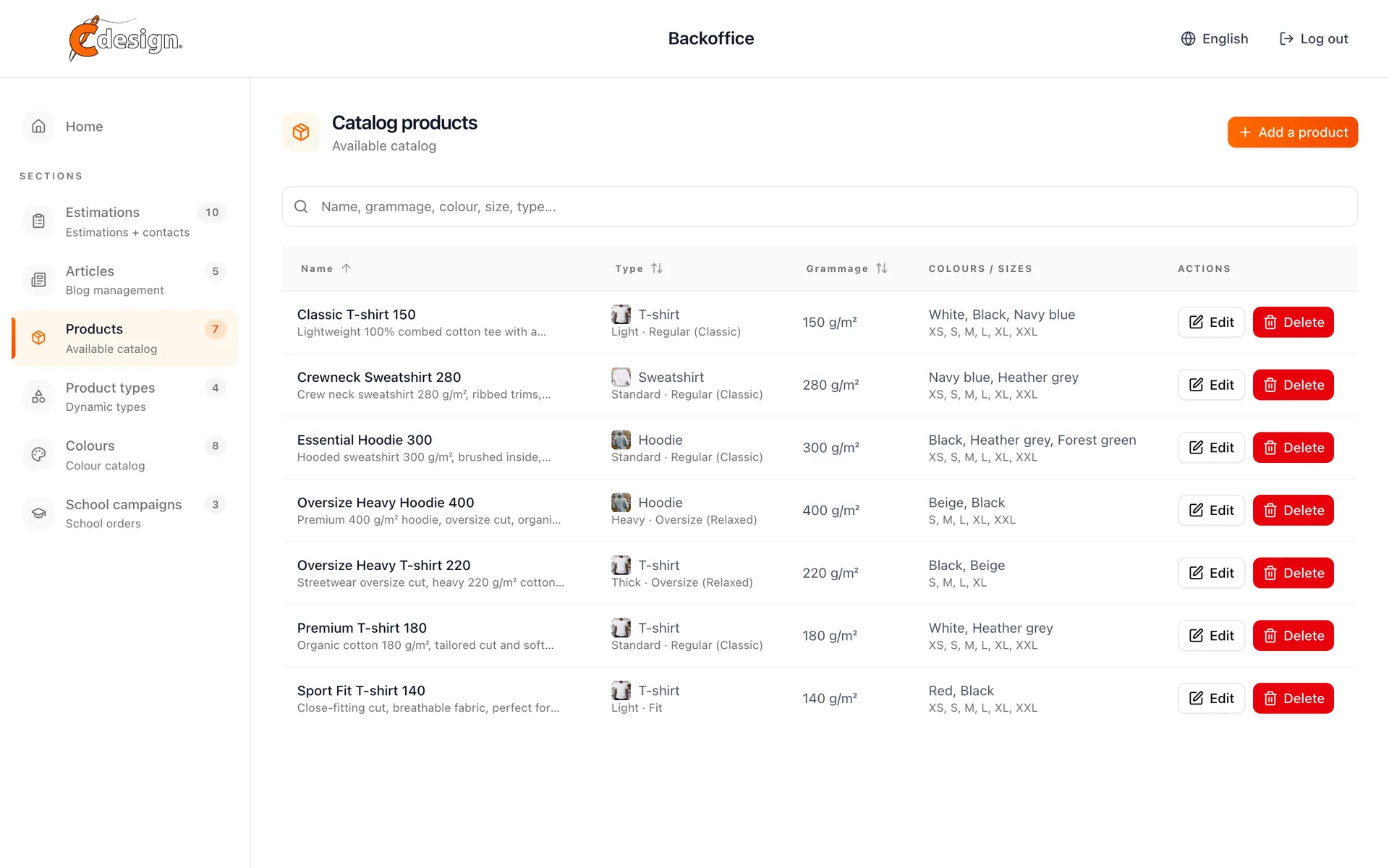
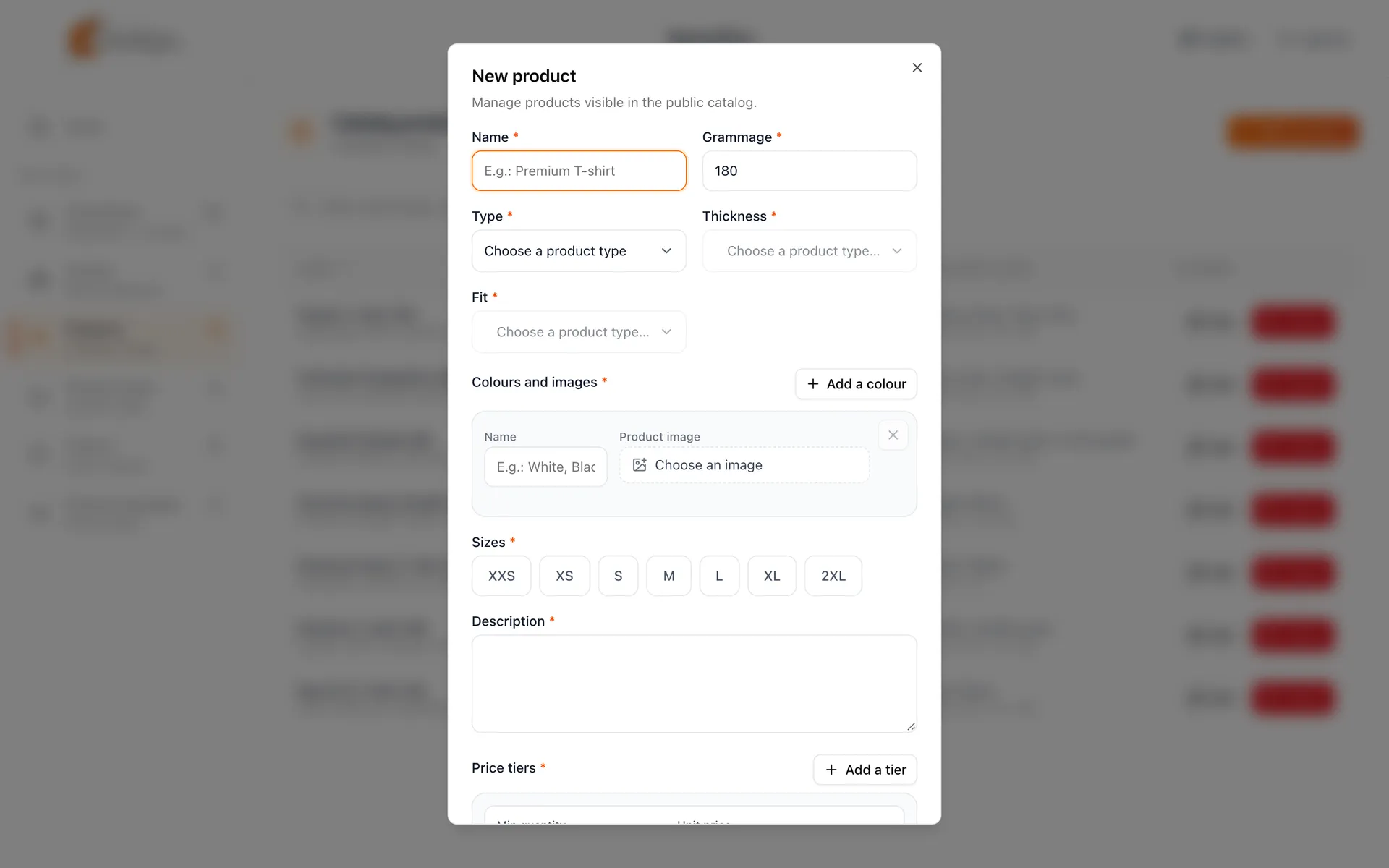
Estimates, products, product types, colours, articles and school campaigns, all editable by the client's team. Nobody calls a developer to change a price.